

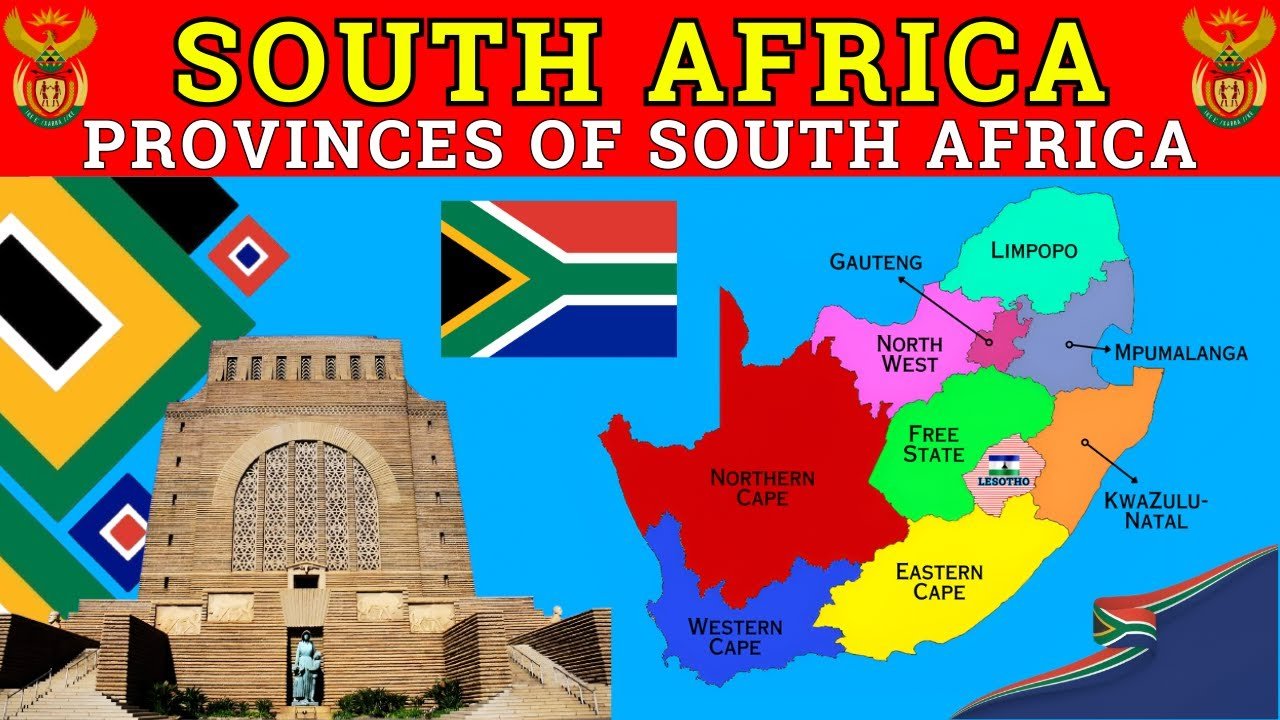
Introduction to the South Africa Map
The South Africa map is an essential tool for understanding the geography, provinces, cities, and natural features of one of Africa’s most diverse countries. Located at the southernmost tip of the African continent, South Africa is known for its rich cultural heritage, varied landscapes, and strategic geographic location.
A South Africa map is not only helps people identify major cities and provinces but also reveals important geographical features such as mountains, rivers, deserts, and coastlines. Whether you are a traveler, student, researcher, or geography enthusiast, studying the map of South Africa provides valuable insights into the country’s structure and regional diversity.
South Africa shares borders with several countries, including Namibia, Botswana, Zimbabwe, Mozambique, and Eswatini. It also surrounds the independent kingdom of Lesotho. Understanding these borders becomes much easier when exploring the South Africa map.
In this article, we will explore the structure, provinces, geographical features, and importance of the South Africa map in detail.
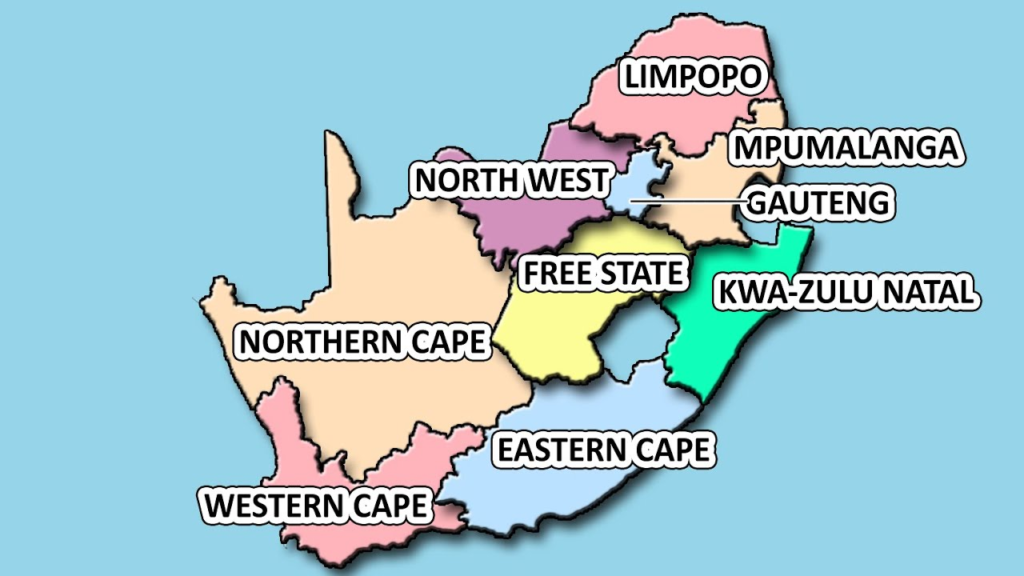
Understanding the South Africa Map and Its Geographic Location
The South Africa map shows the country positioned at the southern tip of Africa, bordered by two major oceans. The western coastline meets the Atlantic Ocean, while the eastern coastline borders the Indian Ocean.
This unique position gives South Africa an extensive coastline of more than 2,500 kilometers. On most maps, you will notice the triangular shape of the country, with coastlines stretching along the south and east.
The South Africa map also highlights several neighboring countries and regional connections. These geographic relationships play an important role in trade, tourism, and regional cooperation within the African continent.
Maps also help identify important routes and transportation networks linking major cities and economic centers across the country.
Provinces Highlighted on the South Africa Map
One of the most important elements of the South Africa map is the division of the country into nine provinces. Each province has its own capital city, economy, and cultural identity.
Western Cape on the South Africa Map
The Western Cape province appears in the southwestern part of the South Africa map. It is home to the famous city of Cape Town, which is also the legislative capital of the country.
Cape Town is known for its stunning coastal scenery, vineyards, and iconic landmarks. The province attracts millions of tourists every year due to its natural beauty and historic sites.
Gauteng on the South Africa Map
The smallest yet most economically powerful province on the South Africa map is Gauteng. It includes the cities of Johannesburg and Pretoria.
Johannesburg is the largest city and a major financial center, while Pretoria serves as the administrative capital of the country.
KwaZulu-Natal on the South Africa Map
KwaZulu-Natal is located on the eastern coast of the South Africa map. Its major city is Durban, which is known for its warm beaches and busy port.
The province also features mountains, wildlife reserves, and a strong cultural heritage influenced by the Zulu people.
Eastern Cape on the South Africa Map
The Eastern Cape province occupies a large area along the southeastern coastline. Important cities include Port Elizabeth and East London.
This region is known for its rugged coastlines, wildlife parks, and historical significance.
Other Provinces on the South Africa Map
The remaining provinces shown on the South Africa map include:
- Free State
- Limpopo
- Mpumalanga
- Northern Cape
- North West
Each of these provinces contributes to the country’s geographic and cultural diversity.
Major Cities on the South Africa Map
The South Africa map highlights several major cities that serve as economic, political, and cultural hubs.
Cape Town on the South Africa Map
Cape Town is one of the most recognizable cities on the map. Located on the southwestern coast, it sits near the famous Table Mountain.
The city is known for tourism, international trade, and government institutions.
Johannesburg on the South Africa Map
Johannesburg appears inland on the map and is considered the economic heart of the country. It developed rapidly due to the discovery of gold in the late 19th century.
Today, Johannesburg is one of Africa’s largest and most influential cities.
Pretoria on the South Africa Map
Pretoria is located close to Johannesburg and serves as the administrative capital. It houses government offices, embassies, and important national institutions.
Natural Features Visible on the South Africa Map
The South Africa map also highlights many natural features that define the country’s geography.
Mountains on the South Africa Map
One of the most prominent mountain ranges shown on the map is the Drakensberg Mountains. This range stretches along the eastern part of the country and forms a natural border with Lesotho.
The mountains are famous for their scenic beauty, hiking trails, and biodiversity.
Rivers on the South Africa Map
Several important rivers appear on the South Africa map. The most significant is the Orange River, which flows westward across the country into the Atlantic Ocean.
Another important river is the Limpopo River, which forms part of the northern border with neighboring countries.
Deserts and Plateaus on the South Africa Map
The South Africa map also reveals semi-arid regions such as the Karoo. This vast plateau region is known for its dry climate and unique landscapes.
These geographical areas influence agriculture, wildlife habitats, and settlement patterns.
Importance of the South Africa_Map for Education
Maps play a vital role in education, particularly in geography and social studies. The South Africa_map helps students understand the country’s physical and political layout.
Teachers often use maps to explain:
- Provincial boundaries
- Natural resources
- Population distribution
- Transportation networks
By studying maps, students can better understand how geography influences culture, economy, and development.
How the South Africa_Map Helps Travelers
For tourists and travelers, the South Africa_map is an important planning tool. It allows visitors to identify destinations, routes, and attractions across the country.
Travelers often use maps to plan trips between major tourist sites such as:
- Kruger National Park
- Garden Route
- Cape of Good Hope
These destinations attract visitors from around the world and highlight the country’s natural beauty.
Maps also help travelers navigate between cities and rural regions efficiently.
Digital South Africa_Map and Modern Technology
Today, digital mapping technology has transformed how people use maps. Instead of relying solely on printed maps, most people now access interactive digital maps through smartphones and computers.
Popular mapping platforms provide features such as:
- GPS navigation
- Satellite imagery
- Real-time traffic updates
- Street-level views
These tools make exploring the South Africa_map easier and more convenient than ever before.
Digital maps are widely used for transportation, tourism, delivery services, and urban planning.
Historical Development of the South Africa_Map
The South Africa_map has evolved significantly over time. Early maps created by European explorers were often inaccurate and incomplete.
As exploration and scientific knowledge improved, cartographers produced more detailed maps of the region. Colonial powers also used maps to define borders and territories.
In 1994, after the end of apartheid, South Africa reorganized its provinces, creating the nine provinces that appear on the modern South Africa_map.
This change reflected a new political and administrative structure for the country.
Why the South Africa_Map Is Important Globally
The South Africa_map is not only important for local understanding but also for global awareness. South Africa plays a major role in international trade, politics, and tourism.
Its geographic location connects shipping routes between the Atlantic and Indian Oceans, making it a strategic hub for maritime transportation.
The country is also a leading economy in Africa and a member of international organizations such as BRICS.
Because of these factors, the South Africa_map is frequently studied by businesses, researchers, and policymakers around the world.
Conclusion
The South Africa_map provides a detailed view of one of the most geographically and culturally diverse countries in Africa. From provinces and major cities to mountains, rivers, and coastlines, the map reveals the unique features that shape the nation.
Understanding the map helps students, travelers, and researchers gain deeper insight into the country’s geography and regional connections. It also highlights the importance of South Africa’s location within the global landscape.
As digital technology continues to improve mapping tools, accessing and exploring the South Africa_map has become easier than ever. Whether used for education, travel planning, or research, the map remains an essential resource for understanding this remarkable country.
