

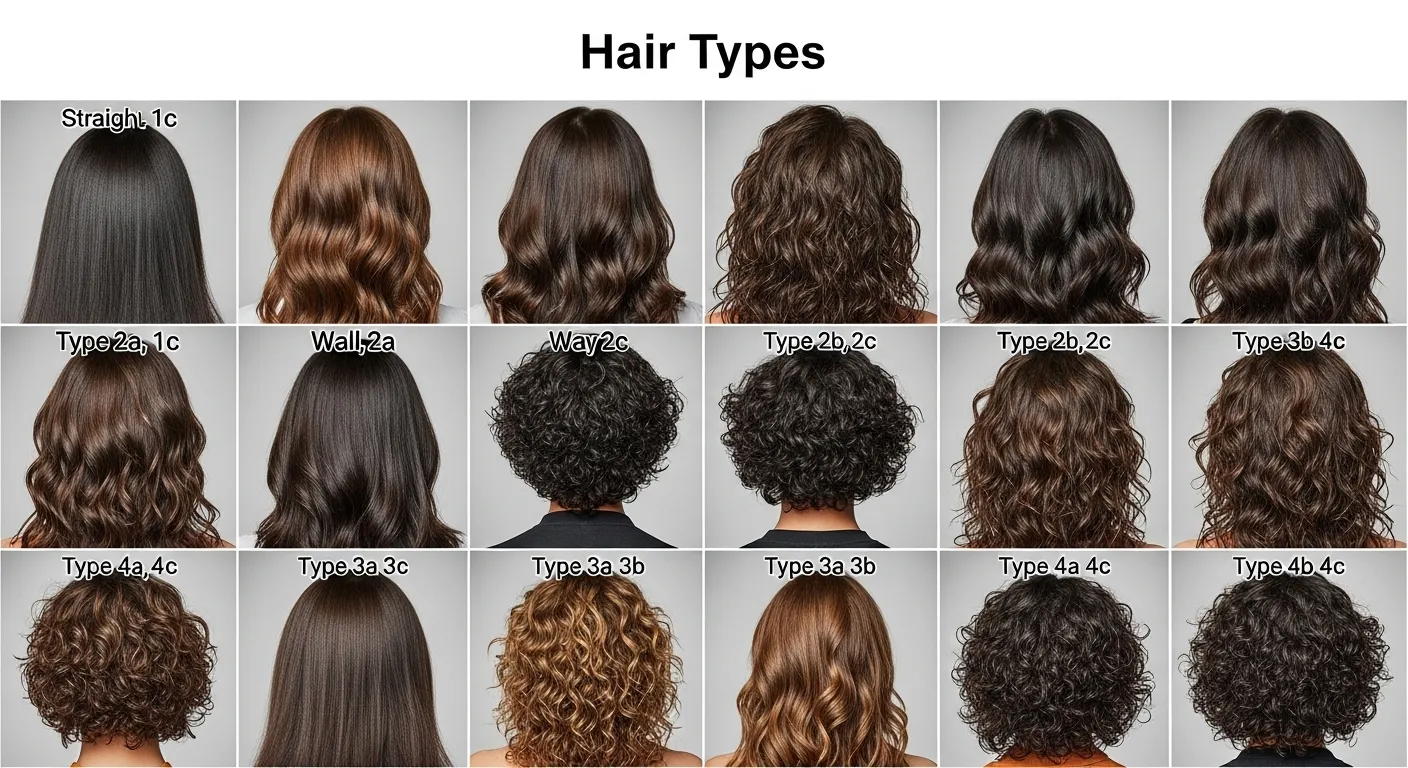
Understanding hair types is one of the most important steps in building the right hair care routine. Every person’s hair is unique, and knowing your hair type helps you choose the correct products, styling methods, and treatments. Whether your hair is straight, wavy, curly, or coily, learning about hair types can improve hair health and appearance.
Hair experts and stylists often classify hair types based on curl pattern, thickness, and texture. These factors determine how hair behaves, how it reacts to humidity, and what kind of care it needs. Knowing your hair type can also help you prevent damage, reduce frizz, and maintain natural shine.
In this complete guide, we will explore the different hair types, how to identify them, and the best ways to care for each type.
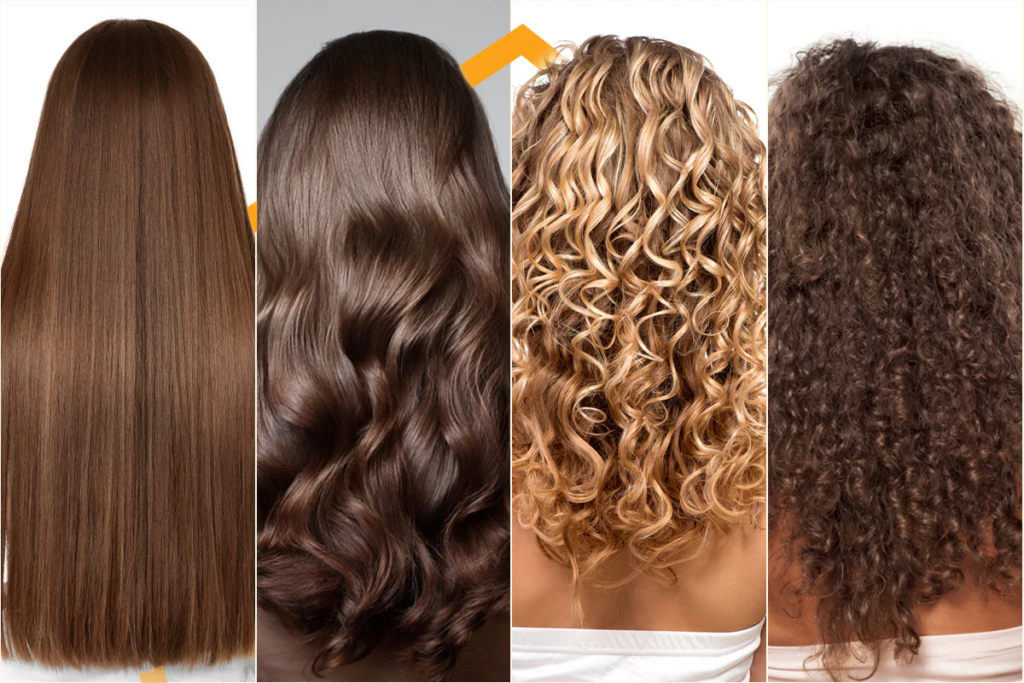
What Are Hair Types?
The term hair types refers to the natural structure and pattern of hair strands. Hair types are commonly categorized based on curl patterns ranging from straight hair to tightly coiled hair.
The most widely used classification system was developed by Andre Walker, a well-known hairstylist who worked with celebrities such as Oprah Winfrey. His system divides hair types into four main categories:
Type 1 – Straight hair
Type 2 – Wavy hair
Type 3 – Curly hair
Type 4 – Coily or kinky hair
Each of these hair types also includes several subcategories depending on curl tightness and texture.
Understanding these categories makes it easier to build a proper hair care routine.
Type 1 Hair Types: Straight Hair
Type 1 is one of the most common hair types. This hair type has no natural curl pattern and falls straight from root to tip.
Characteristics of Type 1 Hair Types
Straight hair has several unique features:
Smooth texture
Natural shine due to even oil distribution
Less frizz compared to curly hair
Can become oily quickly
Because oils travel easily from the scalp to the ends, straight hair types often appear shiny and healthy.
Subcategories of Straight Hair Types
Type 1 hair is divided into three subcategories:
Type 1A Hair Types
This is extremely straight hair that is usually very fine and soft.
Type 1B Hair Types
This type has slightly more body and volume but remains straight.
Type 1C Hair Types
This straight hair type is thicker and may show slight bends.
Best Care Tips for Straight Hair Types
People with straight hair types should focus on lightweight products that do not weigh hair down.
Helpful tips include:
Use volumizing shampoo
Avoid heavy conditioners
Wash hair regularly to prevent oil buildup
Use lightweight styling products
Type 2 Hair Types: Wavy Hair
Type 2 hair types fall between straight and curly hair. Wavy hair forms loose S-shaped patterns and usually has more volume than straight hair.
Characteristics of Wavy Hair Types
Common features of wavy hair types include:
Natural body and movement
Light curl pattern
Moderate frizz
Medium shine
This hair type can sometimes be difficult to manage because it may behave differently in humid environments.
Subcategories of Wavy Hair Types
Wavy hair types are divided into three groups.
Type 2A Hair Types
This type has very loose waves and soft texture.
Type 2B Hair Types
Waves are more defined and may start from the middle of the hair.
Type 2C Hair Types
These waves are thicker and closer to curly hair patterns.
Best Care Tips for Wavy Hair Types
Proper care can enhance the natural wave pattern of these hair_types.
Recommended tips include:
Use curl-enhancing products
Avoid brushing dry hair
Apply leave-in conditioner
Use a diffuser when blow-drying
These techniques help maintain natural wave definition.
Type 3 Hair_Types: Curly Hair
Type 3 hair_types are known for their defined curls and noticeable volume. Curly hair forms spiral patterns and tends to be more prone to dryness.
Characteristics of Curly Hair_Types
Curly hair_types usually have the following characteristics:
Spring-like curls
Higher frizz levels
Increased dryness
Greater volume
Because natural oils cannot easily travel down curly strands, this hair type requires extra moisture.
Subcategories of Curly Hair_Types
Curly hair_types are divided into three subtypes.
Type 3A Hair_Types
This type has large, loose curls that look soft and shiny.
Type 3B Hair_Types
Curls are tighter and have more bounce.
Type 3C Hair_Types
These curls are very tight and dense with lots of volume.
Best Care Tips for Curly Hair_Types
People with curly hair_types should prioritize hydration and gentle handling.
Helpful care practices include:
Use sulfate-free shampoo
Deep condition regularly
Avoid heat styling tools
Use curl creams for definition
These steps help maintain healthy curls.
Type 4 Hair_Types: Coily or Kinky Hair
Type 4 hair_types are the tightest curl patterns. This hair forms small coils or zigzag patterns and has a very delicate structure.
Characteristics of Coily Hair_Types
Coily hair types typically include:
Tight curl pattern
High shrinkage
Fragile strands
Lower natural moisture
Because of its structure, this hair type needs gentle care and frequent moisturizing.
Subcategories of Coily Hair_Types
There are three subtypes of coily hair_types.
Type 4A Hair Types
This type has soft, defined coils.
Type 4B Hair_Types
The curl pattern appears more zigzag shaped.
Type 4C Hair_Types
This is the tightest curl pattern with significant shrinkage.
Best Care Tips for Coily Hair_Types
To maintain healthy coily hair_types, experts recommend:
Moisturizing frequently
Using protective hairstyles
Avoiding excessive heat
Using nourishing oils and creams
These methods help reduce breakage and maintain moisture.
How to Identify Your Hair_Types
Many people are unsure about their exact hair_types. Identifying your hair type is simple and can be done at home.
Follow these steps:
Wash your hair with a gentle shampoo
Let it air dry without styling products
Observe the natural pattern of your hair
Compare it with the hair type categories
Your curl pattern will help determine which of the main hair_types you belong to.
Factors That Affect Hair_Types
Several factors influence hair_types, including genetics, environment, and hair care habits.
Genetics and Hair_Types
Genetics is the primary factor that determines hair structure and curl pattern.
People inherit their hair_types from their parents.
Climate and Hair Types
Weather conditions can affect how hair_types behave.
For example:
Humidity may cause frizz in curly hair
Dry climates may increase dryness in coily hair
Hair Treatments and Hair_Types
Chemical treatments such as coloring or straightening can temporarily change the appearance of hair_types.
However, natural hair texture usually returns as new hair grows.
Choosing Products Based on Hair_Types
Choosing the right products is essential for maintaining healthy hair_types.
Products for Straight Hair_Types
Volumizing shampoo
Lightweight conditioner
Oil-control products
Products for Wavy Hair_Types
Curl-enhancing creams
Lightweight gels
Hydrating conditioners
Products for Curly Hair_Types
Moisturizing shampoo
Leave-in conditioners
Curl-defining creams
Products for Coily Hair_Types
Deep conditioners
Hair oils and butters
Protective styling products
Using the right products can dramatically improve the health of different hair_types.
Common Mistakes People Make With Hair_Types
Many people damage their hair because they do not understand their hair_types.
Common mistakes include:
Using heavy products on fine hair
Overwashing curly hair
Using excessive heat styling tools
Skipping conditioner
Avoiding these mistakes helps maintain strong and healthy hair.
Why Understanding Hair_Types Is Important
Learning about hair_types helps you create a personalized hair care routine.
Benefits include:
Healthier hair
Better styling results
Reduced breakage
Improved moisture balance
Hair professionals often recommend identifying your hair type before choosing hair products or styling techniques.
Conclusion
Understanding different hair_types is essential for maintaining beautiful and healthy hair. From straight to coily textures, each hair type has unique characteristics and care requirements.
By identifying your natural hair_types, you can choose the right products, avoid common hair care mistakes, and develop a routine that works best for your hair.
Whether you have straight, wavy, curly, or coily hair, proper care and knowledge will help you achieve stronger, shinier, and healthier hair over time.
