


Introduction Byron Allen
Byron Allen is one of the most remarkable success stories in the modern entertainment industry. From performing stand-up comedy as a teenager to building one of the largest independently owned media companies in the United States, his journey represents determination, innovation, and business intelligence. Over the years, Byron Allen transformed himself from a comedian into a powerful entrepreneur, television producer, and media mogul whose influence extends across broadcasting, streaming, and digital entertainment.
Unlike many celebrities who remain limited to performing careers, Byron Allen focused heavily on ownership and long-term business growth. He understood early that controlling media assets could create greater opportunities than simply appearing on television. This strategy allowed him to build a media empire that includes television networks, production companies, and digital platforms reaching millions of viewers worldwide.
Today, Byron Allen is recognized not only for his entertainment contributions but also for his advocacy of diversity in media ownership. His career reflects the evolution of the entertainment industry itself, where content creation, distribution, and corporate leadership increasingly overlap. This article explores Byron Allen’s early life, comedy career, business achievements, legal battles, media expansion, and lasting influence on the entertainment world.
You can also read our guide on : Joni Lamb Life
Early Life and the Beginning of Byron Allen’s Entertainment Career
Byron Allen was born in Detroit, Michigan, in 1961 but later moved to Los Angeles, California, with his mother. Growing up in Los Angeles exposed him to the heart of the entertainment industry at an early age. His mother worked at NBC studios, allowing young Byron to observe television production environments and become fascinated with media and comedy.
During his teenage years, Allen developed a strong interest in stand-up comedy. He began writing jokes and practicing comedic routines while still in high school. Unlike many aspiring comedians who struggled to find opportunities, Byron Allen showed exceptional confidence and stage presence early in his career. At just fourteen years old, he started performing at comedy clubs in Los Angeles, gaining attention for his natural humor and storytelling abilities.
One of the major turning points in his life came when legendary comedian Jimmie Walker discovered his talent. Walker became a mentor and encouraged Allen to pursue professional comedy seriously. Soon afterward, Byron Allen began appearing on television comedy programs and gaining national recognition.
At the age of eighteen, Allen became one of the youngest comedians ever to perform on The Tonight Show Starring Johnny Carson. This appearance significantly boosted his profile and introduced him to mainstream audiences across America. Performing on such a major platform at a young age demonstrated his extraordinary talent and ambition.
His early success in comedy helped him build valuable industry connections and understand how television entertainment operated behind the scenes. While many comedians focused solely on performing, Byron Allen was already thinking strategically about production, ownership, and long-term business opportunities.
Byron Allen’s Rise from Television Host to Media Entrepreneur
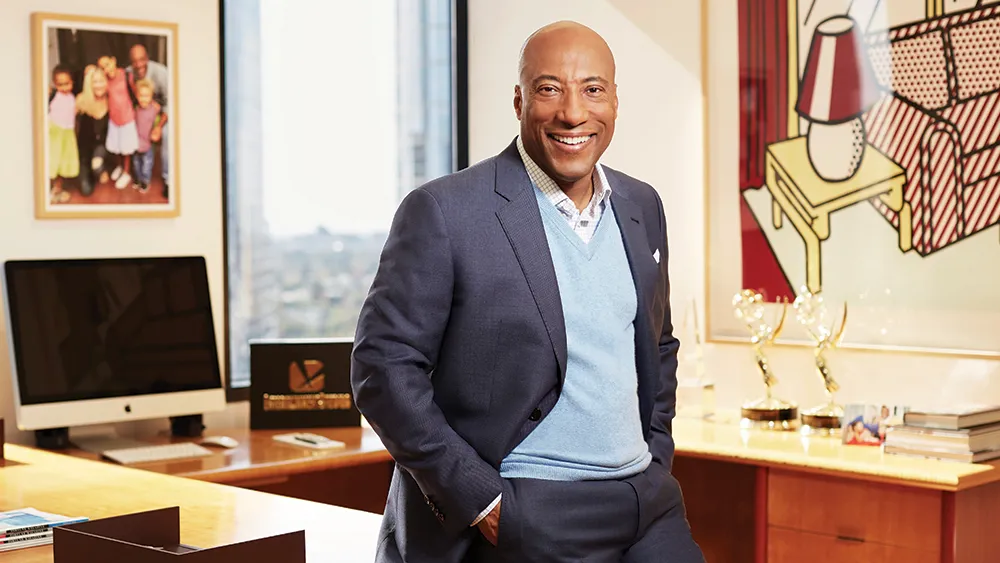
After establishing himself in stand-up comedy, Byron Allen expanded into television hosting and production. One of his most recognized early projects was the entertainment television show “Real People,” where he gained valuable experience working in front of cameras and interacting with audiences nationwide.
However, Byron Allen’s biggest breakthrough came when he shifted his focus toward media ownership and content distribution. In the early 1990s, he founded Entertainment Studios, a company dedicated to producing and distributing television programming. This move marked the beginning of his transformation from entertainer to entrepreneur.
At a time when large corporations dominated television networks and syndication markets, Allen identified an opportunity to create low-cost, advertiser-friendly programming. His company produced numerous television shows covering topics such as comedy, courtrooms, automobiles, pets, and celebrity interviews. These programs were distributed to local television stations across the United States.
One of Byron Allen’s most innovative business strategies involved giving television stations free programming in exchange for advertising revenue-sharing agreements. This approach allowed Entertainment Studios to expand rapidly while minimizing financial risks for broadcasters. The strategy proved highly successful and helped Allen build a profitable media business.
Over time, Entertainment Studios grew into a major multimedia company with television networks, production divisions, and digital assets. Allen’s business model emphasized ownership and control, which allowed him to maintain independence from major Hollywood studios. This independence became one of the defining characteristics of his career.
His entrepreneurial vision extended beyond traditional television. Byron Allen recognized the growing importance of digital media and streaming platforms. As consumer viewing habits changed, he adapted his business strategy to include digital broadcasting and online distribution channels.
Allen’s rise demonstrated that success in entertainment was no longer limited to acting or performing. By focusing on business ownership, he created long-term wealth and influence far beyond what most comedians achieve during their careers.
Expansion of Byron Allen’s Media Empire
The growth of Allen Media Group transformed Byron Allen into one of the most influential media entrepreneurs in America. Over the years, his company acquired numerous television stations, cable networks, and digital properties, significantly expanding its national presence.
One of Allen’s most important acquisitions involved purchasing The Weather Channel in 2018 as part of a multi-billion-dollar deal. This acquisition attracted major industry attention because it demonstrated Allen’s ability to compete with large corporate media giants. Owning such a recognized national network elevated his company’s influence in the broadcasting industry.
Allen Media Group also expanded into film distribution and streaming services. The company invested heavily in entertainment content production, enabling it to compete in the rapidly changing digital media landscape. As streaming platforms became more popular, Byron Allen positioned his business to take advantage of evolving consumer behavior.
In addition to entertainment programming, Allen focused on local television station ownership. His company acquired numerous local broadcast stations across the United States, increasing its reach into regional markets. These acquisitions strengthened the company’s advertising capabilities and diversified its revenue streams.
Another important aspect of Byron Allen’s media empire is its emphasis on independent ownership. In an industry dominated by massive corporations, Allen built one of the largest African American–owned media companies in history. His success challenged traditional industry power structures and inspired conversations about diversity in media ownership.
Allen also became known for aggressive business negotiations and ambitious acquisition goals. Over the years, he explored opportunities involving major television networks and entertainment companies. His willingness to pursue large-scale deals demonstrated confidence in his long-term vision for media expansion.
The continued growth of Allen Media Group reflects Byron Allen’s understanding of the evolving entertainment industry. He successfully adapted to changes in television consumption, advertising trends, and digital technology while maintaining a strong focus on ownership and strategic growth.
Legal Battles, Diversity Advocacy, and Industry Influence

Throughout his career, Byron Allen became widely known for advocating diversity and equal opportunities within the media industry. He frequently spoke about the challenges minority-owned businesses face in securing advertising contracts and distribution agreements.
One of his most high-profile legal battles involved a lawsuit against Comcast. Allen alleged that Comcast discriminated against African American–owned media companies by refusing to carry channels owned by Entertainment Studios. The case gained national attention and eventually reached the United States Supreme Court.
Although the legal dispute generated controversy, it also sparked broader discussions about racial equality and representation in media ownership. Allen argued that minority entrepreneurs often face structural barriers when attempting to compete in major industries. His legal efforts highlighted ongoing concerns regarding corporate diversity and economic inclusion.
Beyond lawsuits, Byron Allen consistently advocated for greater representation in entertainment leadership positions. He emphasized the importance of ownership rather than simply on-screen representation. According to Allen, true industry influence comes from controlling media companies, networks, and distribution systems.
His public statements often focused on economic empowerment and entrepreneurship. Allen encouraged aspiring creators and business leaders to pursue ownership opportunities rather than relying solely on employment within existing corporations. This message resonated strongly with entrepreneurs interested in media, technology, and entertainment industries.
Allen’s influence extended beyond business and legal matters. He became a prominent voice in discussions about the future of television, digital content, and advertising. Industry professionals frequently recognized him as one of the most strategic thinkers in modern broadcasting.
Despite criticism from some competitors and industry analysts, Byron Allen maintained a reputation as a relentless and determined entrepreneur. His willingness to challenge major corporations and pursue ambitious business goals became central to his public identity.
The combination of business success and advocacy efforts helped solidify Allen’s status as one of the most influential figures in modern American media.
Byron Allen’s Net Worth, Lifestyle, and Lasting Legacy
Byron Allen accumulated extraordinary wealth through decades of strategic investments, television syndication, network acquisitions, and digital media expansion. His net worth eventually reached billionaire status, making him one of the wealthiest figures in the entertainment industry.
Unlike celebrities known primarily for luxury lifestyles, Allen often emphasized business growth and investment strategies. While he owns impressive real estate properties and luxury assets, much of his public image centers around entrepreneurship and corporate leadership rather than celebrity culture.
Allen’s financial success demonstrates the power of ownership in media industries. Instead of relying only on performance income, he built long-term wealth through content rights, advertising revenue, and network acquisitions. His business model became a case study in strategic entertainment entrepreneurship.
Beyond wealth, Byron Allen’s legacy includes transforming perceptions of what entertainers can achieve in business. He proved that comedians and television personalities could evolve into major corporate leaders and industry owners. His journey inspired countless aspiring entrepreneurs from diverse backgrounds.
His achievements also contributed to broader discussions about representation in American business. Allen became an example of how minority entrepreneurs can succeed in industries historically dominated by large corporations and limited diversity in ownership.
The future of Allen Media Group will likely continue shaping the entertainment industry for years to come. As streaming technology, digital broadcasting, and online advertising evolve, Byron Allen’s companies remain positioned to adapt and expand further.
Many business experts view Allen’s career as one of the greatest examples of long-term strategic thinking in entertainment history. He recognized early that ownership, distribution, and intellectual property would become increasingly valuable in the modern media economy.
Ultimately, Byron Allen’s legacy extends far beyond comedy or television hosting. He helped redefine media entrepreneurship, challenged industry norms, and built an entertainment empire that continues influencing broadcasting, digital media, and corporate diversity discussions worldwide.

Conclusion
Byron Allen represents one of the most inspiring success stories in modern entertainment and business history. Beginning as a teenage stand-up comedian, he transformed himself into a billionaire media mogul through determination, innovation, and strategic vision.
His rise from television performer to major media owner demonstrates the importance of long-term thinking and business ownership in the entertainment industry. Through Allen Media Group, Byron Allen built a powerful broadcasting empire that includes television networks, local stations, streaming platforms, and film distribution operations.
At the same time, his advocacy for diversity and equal opportunity helped shape important conversations about representation in media ownership. His legal battles and public statements highlighted structural challenges within the entertainment business while inspiring future entrepreneurs to pursue independence and ownership.
Byron Allen’s influence continues growing as digital media reshapes global entertainment. Whether viewed as a comedian, entrepreneur, investor, or industry leader, his contributions to television and media remain significant. His story proves that with persistence, creativity, and strategic planning, it is possible to transform talent into a lasting business empire.
