
In today’s digital world, the demand for versatile tech professionals is higher than ever. One of the most sought-after roles in the software industry is a full stack developer. Companies prefer developers who can handle both front-end and back-end development, making them valuable assets in startups and large enterprises alike.
This comprehensive guide explains what a full stack developer does, required skills, tools, salary expectations, career roadmap, and future opportunities in 2026 and beyond.
What Is a Full Stack Developer?
A full stack developer is a software professional who works on both the front-end (client side) and back-end (server side) of web applications. Unlike specialized developers, they understand the complete architecture of an application.
Key Responsibilities of a Full Stack Developer
- Designing and developing front-end interfaces
- Managing server-side logic and databases
- Integrating APIs and third-party services
- Handling deployment and hosting
- Debugging and maintaining applications
Because of their broad skill set, organizations often rely on a full stack developer to manage entire projects efficiently.
Front-End Skills Required for a Full Stack Developer
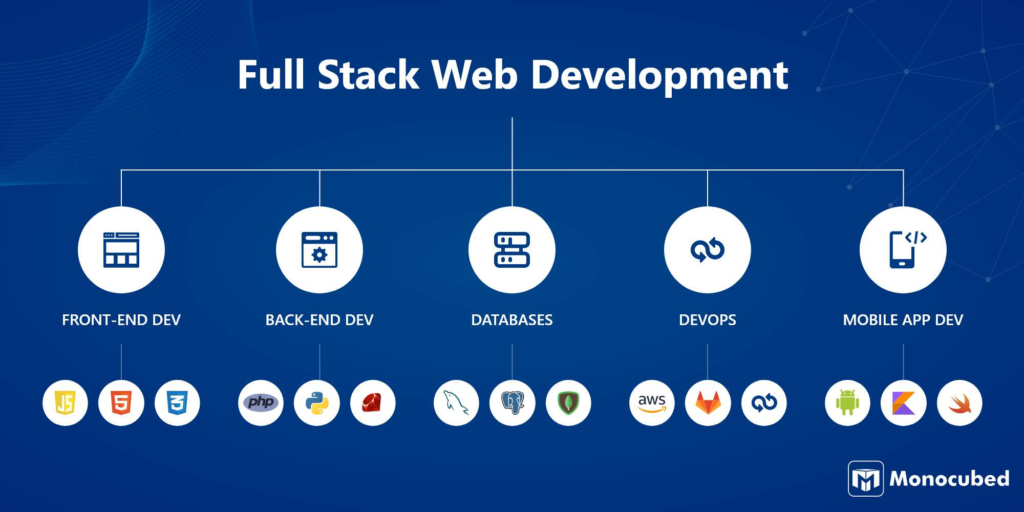
Front-end development focuses on what users see and interact with. A skilled professional must understand:
1. HTML, CSS, and JavaScript
These are foundational technologies for building web interfaces.
2. Front-End Frameworks
- React.js
- Angular
- Vue.js
3. Responsive Design
Understanding how to make websites mobile-friendly is crucial.
4. UI/UX Principles
User experience plays a major role in modern web applications.
A full stack developer must combine creativity with technical expertise to build smooth user experiences.
Back-End Skills Required for a Full Stack Developer
Back-end development manages databases, servers, and application logic.
1. Programming Languages
- Node.js
- Python
- Java
- PHP
- Ruby
2. Database Management
- MySQL
- PostgreSQL
- MongoDB
3. API Development
Creating and integrating RESTful APIs is a core responsibility.
4. Authentication & Security
Handling user data securely is critical in modern applications.
A strong understanding of server-side architecture defines an effective full stack developer.
Full Stack Developer Tools and Technologies
Modern development requires using various tools. Some essential technologies include:
- Git & GitHub for version control
- Docker for containerization
- AWS or Azure for cloud deployment
- CI/CD tools for automation
- NPM or Yarn for package management
Mastering these tools improves productivity and employability.
How to Become a Full Stack Developer in 2026
If you want to become a full stack developer, follow this step-by-step roadmap:
Step 1: Learn Basic Web Development
Start with HTML, CSS, and JavaScript fundamentals.
Step 2: Choose a Back-End Language
Pick one language such as Node.js or Python.
Step 3: Understand Databases
Learn SQL and NoSQL systems.
Step 4: Build Projects
Create real-world applications to strengthen your portfolio.
Step 5: Learn Deployment
Understand how to host applications on cloud platforms.
Step 6: Practice Problem Solving
Data structures and algorithms are important for interviews.
Consistency and hands-on practice are key to becoming a successful full stack developer.
Full Stack Developer Salary in 2026
Salary varies based on location, experience, and skill level.
Entry-Level
$50,000 – $80,000 per year
Mid-Level
$80,000 – $120,000 per year
Senior-Level
$120,000 – $180,000+ per year
Freelance and remote opportunities can increase earning potential significantly. A full stack developer with strong cloud and DevOps skills often earns more.
Why Companies Prefer a Full Stack Developer
Organizations benefit from hiring multi-skilled professionals.
Advantages:
- Cost-effective hiring
- Faster project development
- Better team collaboration
- Strong understanding of entire system architecture
Startups especially prefer a full stack developer because they can handle multiple responsibilities.
Full Stack Developer vs Front-End and Back-End Developer
Understanding the difference helps clarify career goals.
| Role | Focus Area | Skill Range |
|---|---|---|
| Front-End Developer | User Interface | Limited to client-side |
| Back-End Developer | Server & Database | Limited to server-side |
| Full Stack Developer | Both Front-End & Back-End | Broad & versatile |
A full stack developer combines the expertise of both roles.
Certifications for a Full Stack Developer
Certifications can boost career prospects:
- AWS Certified Developer
- Microsoft Azure Developer
- Google Cloud Professional
- Meta Front-End Developer Certification
Although certifications help, practical skills matter most.
Freelancing as a Full Stack_Developer
Freelancing is a growing opportunity in 2026.
Popular Platforms:
- Upwork
- Fiverr
- Freelancer
Freelance developers can earn per project and often work remotely with international clients.
Challenges Faced by a Full Stack_Developer
While the role is rewarding, it comes with challenges:
- Constant learning of new technologies
- Managing both client-side and server-side bugs
- Keeping up with industry trends
- Handling workload in startups
Time management and continuous learning help overcome these challenges.
Future Scope of a Full Stack_Developer
The demand for skilled professionals continues to grow due to:
- Rapid digital transformation
- Rise of SaaS platforms
- Growth of AI-powered web apps
- Expansion of e-commerce
A full stack developer with AI integration knowledge will have strong career growth opportunities.
Soft Skills Needed Alongside Technical Skills
Apart from coding, important soft skills include:
- Communication
- Problem-solving
- Team collaboration
- Project management
- Adaptability
Employers value developers who can communicate effectively with designers and stakeholders.
Best Tech Stack for a Full Stack_Developer
Some popular stacks in 2026 include:
MERN Stack
- MongoDB
- Express.js
- React
- Node.js
MEAN Stack
- MongoDB
- Express.js
- Angular
- Node.js
LAMP Stack
- Linux
- Apache
- MySQL
- PHP
Choosing the right stack depends on project requirements.
Building a Portfolio as a Full Stack_Developer
A strong portfolio increases job opportunities.
Include:
- Personal projects
- GitHub repositories
- Live demos
- Case studies
- Client testimonials
Real-world applications demonstrate practical experience better than certificates.
Remote Work Opportunities for a Full Stack_Developer
Remote jobs are increasing globally.
Benefits include:
- Flexible work hours
- Global client exposure
- Higher earning potential
- Work-life balance
Many companies now hire remote full stack_developers to reduce operational costs.
Conclusion: Is Full Stack_Developer a Good Career in 2026?
Becoming a full stack_developer is one of the best career choices in the tech industry. The role offers:
- High salary potential
- Job security
- Global opportunities
- Freelancing flexibility
- Continuous learning and growth
With proper dedication, hands-on practice, and strategic learning, anyone can build a successful career as a full stack_developer.
