
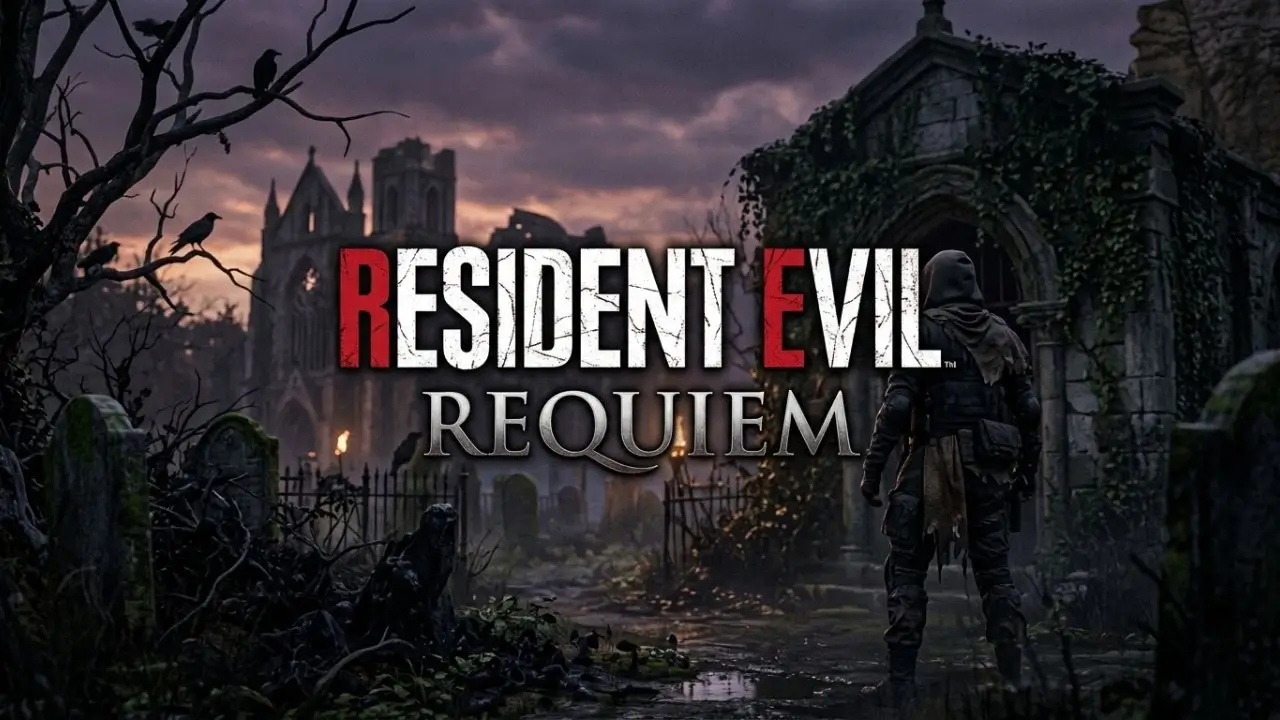

Resident Evil Requiem takes the storied horror series back to a location of immense significance to its history: Raccoon City. As the ninth main entry in the franchise, the game was developed by Capcom as a survival-horror experience. It launched on February 27, 2026, for PlayStation 5, Xbox Series X|S, and PC, with a simultaneous release for the Nintendo Switch 2.
The story centers on two very different characters. FBI analyst Grace Ashcroft investigates a mysterious case that links her to her mother’s death and the events of Raccoon City. Meanwhile, Leon S. Kennedy—one of the series’ most iconic characters—returns as a seasoned agent. This contrast between Grace and Leon defines much of the gameplay experience: Grace embodies a more cautious approach to survival horror, whereas Leon’s gameplay leans heavily into action.
Resident Evil Requiem combines this style of gameplay with modern elements while remaining firmly rooted in the survival horror genre. If you would like to learn more about the hallmarks of this genre—such as resource management, puzzles, and various horror gameplay styles—you can find further helpful information in our guide to Survival Horror Games.
Capcom blends classic series elements with modern technology. The game features investigation, puzzles, resource management, and combat, alongside varied perspectives and more intense action sequences. Players can switch between first-person and third-person viewpoints, allowing them to choose how they wish to experience the game’s dark, atmospheric settings.
The Story of Resident Evil Requiem and the Connection to Raccoon City

The story begins with a mysterious death. FBI analyst Grace Ashcroft is assigned to investigate what initially appears to be an unusual case. However, the location holds personal significance for her: the abandoned hotel she is sent to is linked to the death of her mother, Alyssa Ashcroft. Consequently, a professional investigation quickly transforms into a personal journey into a past Grace had intended to leave behind.
The story plays just as important a role as the action and horror. If you enjoy games with strong characters, a cohesive plot, and a grand narrative journey, you might also want to check out our guide to Story-Driven Games.
Alyssa Ashcroft is not an entirely unknown figure in Resident Evil lore; she worked as a journalist during the original Raccoon City incident and later continued to investigate the circumstances surrounding Umbrella. Her story connects the new protagonist to a crucial part of the series’ established narrative. Resident Evil Requiem leverages this connection to revisit the events surrounding Raccoon City.
Grace Ashcroft and Leon S. Kennedy
Grace is not a typical action hero. Her role as an FBI analyst shapes her approach to dangerous situations; observing, investigating, connecting clues, and carefully managing resources define her gameplay experience. This creates a different feel compared to the combat-focused segments featuring Leon.
Leon, by contrast, brings decades of experience to the table. A survivor of the Raccoon City incident, he has battled numerous biological threats in the years since. In *Requiem*, he appears as a seasoned DSO agent. His story eventually intersects with Grace’s investigation, linking their distinct narrative threads.
The return to Raccoon City is, therefore, more than just a nostalgic choice. Capcom describes the game as part of a story that spans the series’ entire lore. The ruined city and its history serve as a vital backdrop for the new narrative.
Two Protagonists, Two Distinct Gameplay Experiences
One of the most striking features of *Resident Evil Requiem* is the split between Grace and Leon. The two characters do not simply play the same way with just different outfits; their sections focus on different priorities, causing the game’s pacing to shift constantly.
Grace’s segments emphasize a sense of vulnerability. Ammunition and other items are scarce, meaning players shouldn’t simply fight every enemy they encounter. Players must observe, weigh their options, and sometimes decide whether fleeing is a better choice than combat. This resource management harkens back to the series’ classic survival-horror roots.
Grace also features an interesting crafting system. She can use the blood of infected enemies to create specific items, ammunition, and injectors. This turns the act of examining defeated foes into a strategic part of resource planning rather than just a trivial side activity.
Leon Focuses More on Action
When Leon takes center stage, the feel of the game changes significantly. His experience allows for a more aggressive approach to combat. In addition to various firearms, he wields an axe and can take on enemies using melee attacks, parries, and other techniques. In certain situations, he can even turn enemy weapons against them.
His inventory system also places greater emphasis on weaponry and gear. Weapons can be customized with various parts, while ammunition and healing items are organized using the familiar briefcase system. Consequently, Leon’s section feels like a blend of survival horror and intense action.
This combination is a core element of the game. Rather than committing to a single direction, *Resident Evil Requiem* merges two distinct traditions within the series: slow-paced, suspenseful horror and dynamic combat. Microsoft’s Xbox Wire also describes the game as a combination of the franchise’s two well-known gameplay styles.
Gameplay, Perspectives, and Horror
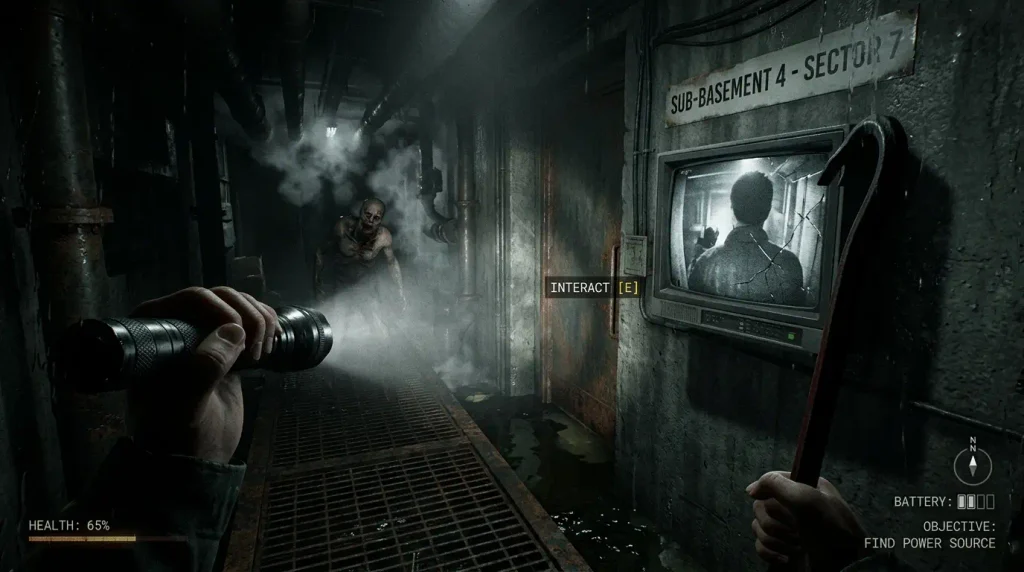
Resident Evil Requiem does not rely solely on a fixed camera angle. Players can switch between first-person and third-person perspectives. This option is particularly interesting because the two perspectives affect horror and action in different ways.
The first-person perspective can make environments feel more immediate and personal. When a dark corridor is only dimly lit, the player sees less of their surroundings and must focus more intently on sounds, movements, and specific details. This perspective can heighten the sense of uncertainty, especially during Grace’s survival-horror segments.
In contrast, the third-person perspective offers a broader view of the playable character and their immediate surroundings. This can be especially helpful during combat—such as when multiple enemies attack simultaneously or when positioning is crucial. Having both perspectives available gives players greater control over their personal playstyle.
Investigation, Puzzles, and Resources
Resident Evil Requiem is not limited to combat; investigation and puzzles are also integral to the gameplay. These elements are vital to the survival-horror genre, as they alter the pacing between action sequences.
Resource management remains important as well. Healing items, ammunition, and other supplies should not be used recklessly. For Grace, the choice to either bypass an enemy or defend oneself with limited resources can directly influence the course of the game. Capcom explicitly emphasizes the scarcity of supplies and the need to assess enemies carefully.
Various difficulty levels are also available. Nintendo describes, among others, a “Casual” mode featuring helpful assists, as well as more demanding difficulty settings for players seeking a greater challenge.
Raccoon City, Atmosphere, and Technical Presentation
Raccoon City is one of the most iconic settings in the Resident Evil series. In *Resident Evil Requiem*, the series returns to this location, though not in its original form. Players explore, among other areas, the city’s ruined remains and other grim locales.
These locations include a zombie-infested care facility and a version of Raccoon City scarred by missile strikes. These environments serve as more than just a backdrop; they also evoke the catastrophe that shaped the series’ history.
The abandoned hotel also plays a pivotal role. For Grace, this place is linked to her mother’s death, lending the environment personal significance. Consequently, the horror stems from more than just monsters; memories, uncertainty, and questions about what transpired within these buildings all contribute to the atmosphere.
Modern Graphics and the RE ENGINE
Capcom is developing *Resident Evil Requiem* using the RE ENGINE, which has already powered several of the company’s modern titles. Upon announcement, Capcom highlighted the engine’s enhanced graphical capabilities and its focus on a more cinematic realism.
This technical presentation reinforces the horror atmosphere. Facial expressions, environmental details, lighting, and ruined settings make scenes feel significantly more authentic. This is particularly crucial for a game like *Requiem*, as many of its most powerful moments arise not from the enemies themselves, but from the tension preceding a potential encounter.
On PC, the game also supports modern graphics technologies. During the Resident Evil Showcase, Capcom Germany highlighted features such as DLSS 4 and path tracing, as well as the game’s availability on GeForce NOW at launch.
Platforms, Release, and What Awaits Players
Resident Evil Requiem was released on February 27, 2026. The initial platform lineup included PlayStation 5, Xbox Series X|S, and PC. The Nintendo Switch 2 was also confirmed as a launch platform and received the game on the same day.
Resident Evil Requiem ist außerdem für Nintendo Switch 2 erhältlich. Weitere Informationen zur Switch-2-Version, den unterstützten Funktionen und der Veröffentlichung findest du auf der offiziellen Nintendo-Seite zu Resident Evil Requiem.
This makes Requiem one of the series’ major multi-platform releases. The PlayStation version offers support for DualSense features, among other things, as well as a version optimized for the PS5 Pro. The official PlayStation page also lists a free demo and a Deluxe Edition containing additional content.
What kind of player is Requiem for?

Players who enjoy classic Resident Evil survival horror will find several familiar elements here: limited resources, investigation, puzzles, and dangerous encounters. At the same time, the inclusion of Leon means the game also appeals more strongly to those who prefer action-packed combat.
Fans of the series’ lore will also find plenty of connections. Grace links the new storyline to Alyssa Ashcroft, while Leon provides a direct connection to the events of Raccoon City. In doing so, the game attempts to tell a new story without completely disregarding the past.
For newcomers, the extensive backstory might seem overwhelming at first. However, the core premise can be understood without knowing every detail of the earlier games: an FBI analyst investigates a mysterious case that links her to her family history and one of the Resident Evil world’s greatest catastrophes, while Leon is simultaneously drawn into the events.
Conclusion
Resident Evil Requiem bridges two key aspects of the Resident Evil series. Grace Ashcroft represents cautious survival horror—characterized by limited resources, investigation, and a personal connection to the past—while Leon S. Kennedy brings experience, weaponry, and significantly more action to the table. Together, their contrasting playstyles form the foundation of this new adventure.
The return to Raccoon City is particularly compelling. The city is not merely a familiar name from earlier games; it is once again tied to a narrative exploring loss, biological threats, and the aftermath of the original incident. By combining first- and third-person perspectives, puzzles, crafting, resource management, and action-packed combat, Requiem seeks to unite various facets of the franchise into a single game.
For fans of the series, the interplay between new figures and established characters is a major draw. At the same time, the game’s diverse gameplay styles offer a unique approach rather than simply rehashing previous Resident Evil adventures. In doing so, Capcom positions Requiem as the ninth mainline entry and a pivotal title for the series’ 30th anniversary.
Frequently Asked Questions about Resident Evil Requiem
1. When was Resident Evil Requiem released?
Resident Evil Requiem was released on February 27, 2026. The game launched on PlayStation 5, Xbox Series X|S, and PC, as well as on the Nintendo Switch 2 at launch.
2. Who is the main character in Resident Evil Requiem?
The game features two central protagonists: Grace Ashcroft and Leon S. Kennedy. Grace is an FBI analyst investigating a mysterious case, while Leon, an experienced DSO agent, becomes entangled in the events.
3. Is Resident Evil Requiem set in Raccoon City?
Yes. Raccoon City plays a key role in the story. The game takes players back to the city’s ruined remains and links the new narrative to the events of the original Raccoon City incident.
4. Can Resident Evil Requiem be played from a first-person perspective?
Yes. Resident Evil Requiem supports both first-person and third-person perspectives. This allows players to experience the horror and action sequences from different viewpoints.
5. Is Resident Evil Requiem more horror or action-oriented?
The game combines both approaches. Grace’s sections focus more on survival horror, resource management, and a cautious approach, whereas Leon’s gameplay segments are designed to be significantly more action-packed.