
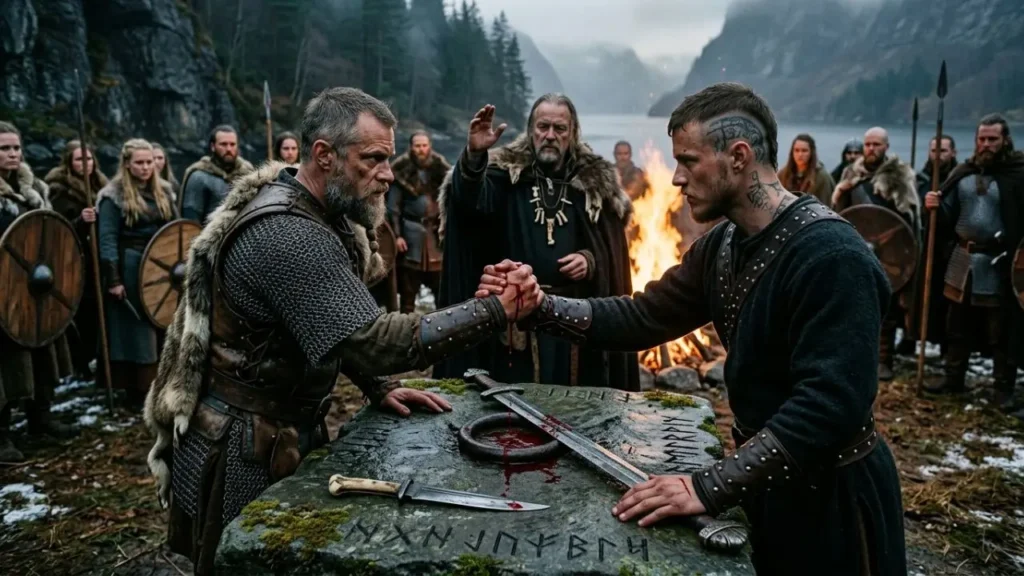

A promise can bind two people together, but a broken promise can trigger an entire conflict. In stories about Vikings, the term “Norse Oath of Blood” plays a special role. It evokes themes of honor, family, loyalty, and vengeance within the world of Norse warriors. But what exactly does this expression mean? And did such oaths actually exist?
In this article, you will discover the meaning behind the term, how oaths were understood in the ancient North, and why blood oaths continue to appear today in films, television series, and video games.
1. What does “Norse Oath of Blood” mean?
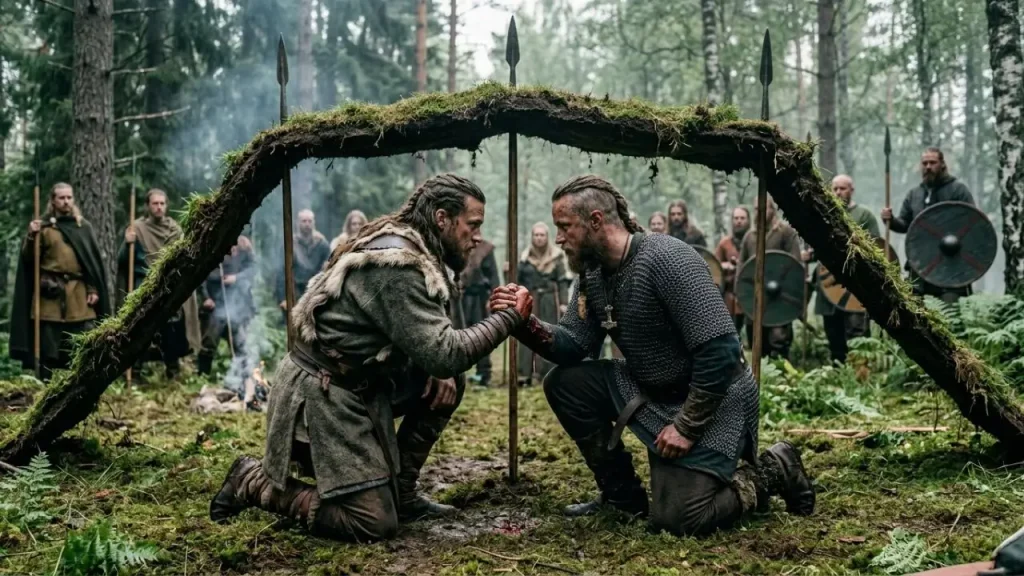
The English term “Norse Oath of Blood” refers to a particularly solemn vow that binds individuals together, often involving themes of loyalty, protection, or vengeance.
A “blood oath” does not necessarily refer to a specific, historically documented ritual. The term can carry various meanings, especially within modern narratives about the Vikings. Therefore, it is important to distinguish between authentic historical Norse customs and fictionalized portrayals.
A simple example: two warriors might pledge to protect each other’s families. If one of them breaks their word, the trust between them could be destroyed—a scenario that, in a dramatic story, might even spark a long-standing conflict.
2. What role did oaths play among the Vikings?
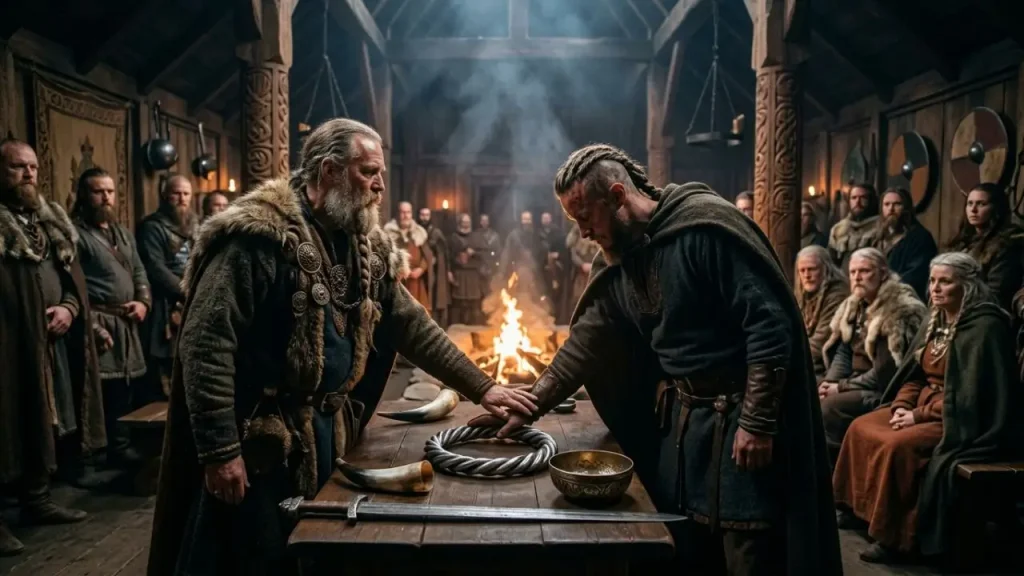
Oaths were significant in the medieval North, as trust and reputation shaped how people lived together. Individuals needed to be able to rely on agreements—especially in the absence of modern courts or police forces.
An oath could serve to confirm a promise of support, a peace treaty, or an agreement between groups. Anyone who broke their word risked a tarnished reputation and, potentially, the emergence of new feuds.
However, not all Norse oaths were “blood oaths.” Historical sources describe various types of promises and legal agreements, with the specific rules varying according to time and place.
For the Vikings, honor was a vital component of social life. Nevertheless, they did not constitute a monolithic group with uniform rules; their society evolved over the course of many centuries.
3. Why did blood play a role in such oaths?
In many cultures, blood is understood as a symbol of life, kinship, and a deep, enduring bond. For this reason, it serves effectively in storytelling as a symbol for a promise that must never be broken.
In a Viking-themed story, for instance, blood might be used to show that two characters regard one another as brothers, even though they are not biologically related. Such a motif makes their relationship easier for the audience to grasp.
However, a word of caution: there is no reason to assume that all Vikings regularly engaged in a formal “blood oath” ritual. Many modern depictions blend historical concepts with pure imagination.
Those interested in actual history should therefore look to archaeological findings and reliable historical sources. An exciting scene in a film is not, in itself, proof of an ancient custom.
4. The Norse Blood Oath in Films and Video Games
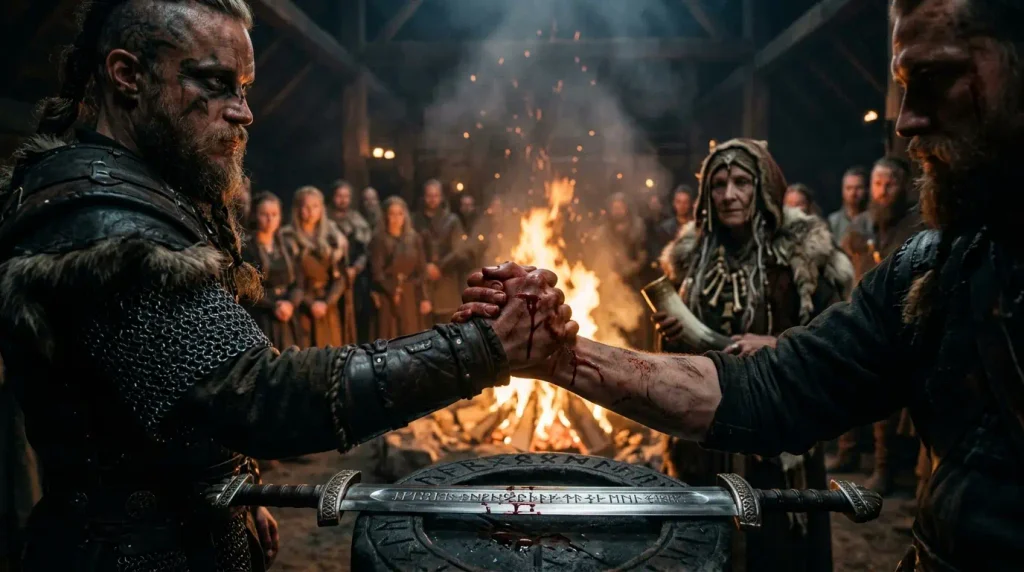
Blood oaths fit well into stories about Vikings because they highlight intense emotions and difficult choices. A character might have to choose between their family and an old promise. Another might have to decide whether to seek revenge or pursue peace.
Such conflicts make characters compelling. They demonstrate that loyalty sometimes requires courage, yet can also lead to dangerous consequences.
In video games, oaths can also shape the narrative. A player might assist an ally simply because they made a promise—only to later face a dilemma: is that promise more important than the safety of others?
When you encounter a game or series featuring this theme, pay close attention to how the characters handle their promises. Ask yourself: are they acting out of friendship, fear, duty, or a desire for revenge? Doing so will help you better understand the significance of the oath within the story.
Players interested in Viking adventures can visit to explore the game’s story, tactical battles, and settlement-building features.
5. What can we learn from this today?
The concept behind a blood oath can also be applied to our lives today. People make promises to friends, family members, or teammates to support them. Such commitments can strengthen relationships, provided that everyone involved is honest with one another.
However, a promise should never serve as an excuse for violence. If someone demands revenge or pressures you to engage in dangerous acts, you are under no obligation to follow through. Safety and responsible behavior are more important than blind obedience.
A good promise should be made voluntarily and should not cause harm to anyone. Before you commit to something, consider whether you are truly able to keep your word. It is better to be honest than to make a promise that you will eventually have to break.
Conclusion
The Norse “oath of blood” primarily represents loyalty, honor, and a strong bond between individuals. While oaths held great significance in the ancient North, modern accounts of blood oaths often incorporate invented elements. Distinguishing between the two allows for a better understanding of Norse history and a more conscious appreciation of compelling Viking-themed narratives.
FAQs: Norse Oath of Blood
1. What does “Norse Oath of Blood” mean?
The term “Norse Oath of Blood” refers to a solemn vow—a powerful promise often tied to themes of loyalty, honor, family, or vengeance.
2. Did Vikings actually take “blood oaths”?
Oaths and promises held great significance in Norse society. However, there is no historical evidence to suggest that all Vikings practiced a standardized “blood oath” ritual. Many such depictions originate from modern films and games.
3. Why is the “Norse Oath of Blood” popular in films and video games?
Blood oaths add drama to stories by intertwining themes of friendship, betrayal, loyalty, and revenge. They frequently compel characters to make difficult, high-stakes decisions.