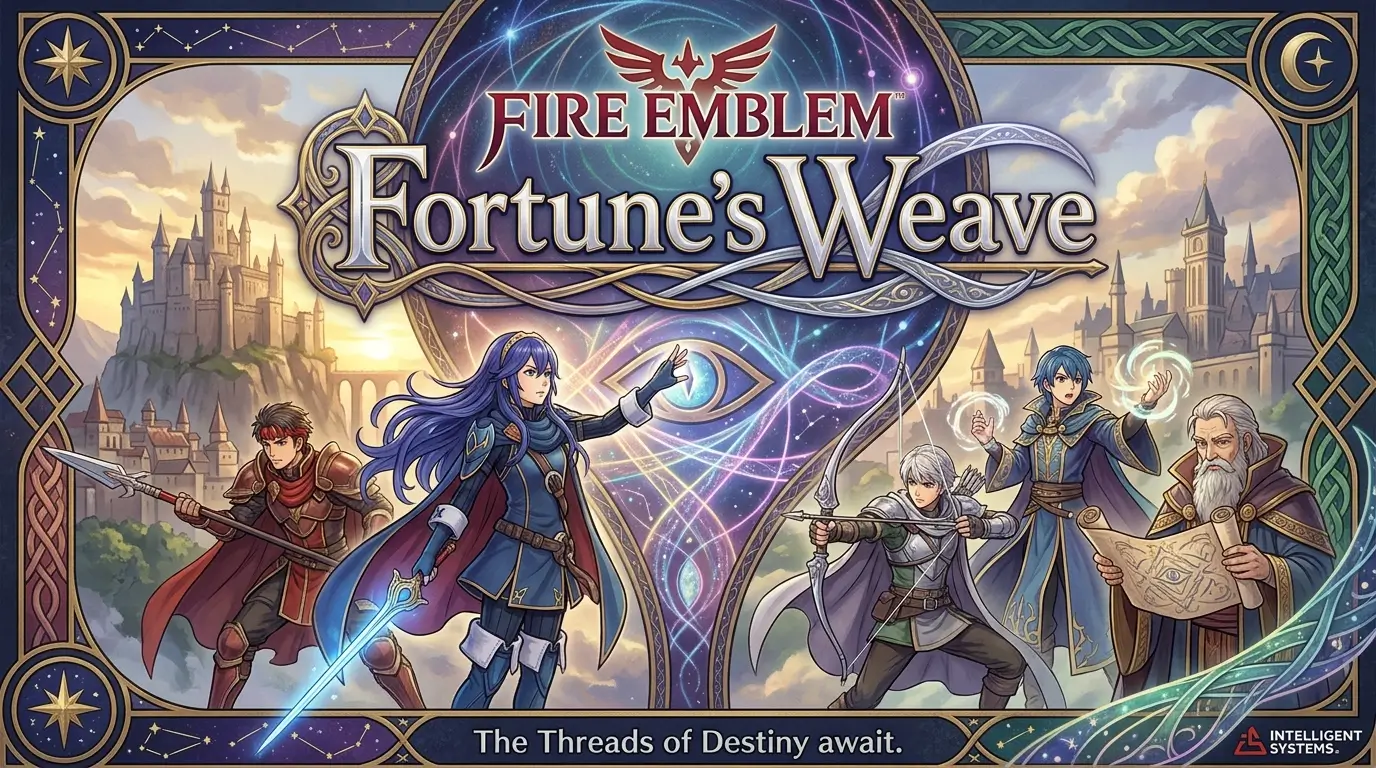

When a game intertwines the past, present, and future, every decision takes on special significance. This is precisely the premise of *Fire Emblem: Fortune’s Weave*. This new strategy RPG from Nintendo and Intelligent Systems transports players to the Dagdan Empire, where mighty warriors compete in the “Heroic Games.” The victor’s prize is extraordinary: a single wish.
Yet, a far greater threat lurks behind the tournament. A resurrected demon god named Balor is pushing the empire to the brink of ruin. To avert catastrophe, four heroes from different eras must be brought together.It is precisely the combination of personal goals, character development, and a larger world that makes the game particularly interesting for fans of story-driven games. Although their stories begin separately, they eventually converge into a shared battle for the future.
*Fire Emblem: Fortune’s Weave* launches exclusively for the Nintendo Switch 2 on September 17, 2026. Nintendo describes the game as a blend of RPG and strategy elements, in which the four heroes pursue their own storylines while the player shapes their development through tactical combat, exploration, and relationships.
A New Story in the Dagdan Empire
The world of *Fire Emblem: Fortune’s Weave* is defined by a unique blend of mythology, political interests, and personal destiny. The Dagdan Empire boasts a long history, having been guided by the influence of gods for some 1,500 years. At its heart lies Dagsion, the empire’s capital and the venue for the Heroic Games.
The Heroic Games are no ordinary tournament. Fighters from various regions travel to Davison to prove their strength, with the victor promised the fulfillment of a single wish. For the four central figures, however, this prize holds a deeply personal significance. Cai seeks to rescue his imprisoned father; Dietrich is in search of ever-stronger opponents; Theodora fights for the future of her homeland; and Leda is driven by a desire for revenge for her murdered father.
These diverse objectives create an intriguing premise for the story. Initially, the four characters have no obvious reason to fight alongside one another; each brings their own unique past and motivations. This allows the narrative to focus more intensely on personal conflicts, rather than simply assigning the same goal to every character from the outset.
Four Heroes, Four Personal Destinies
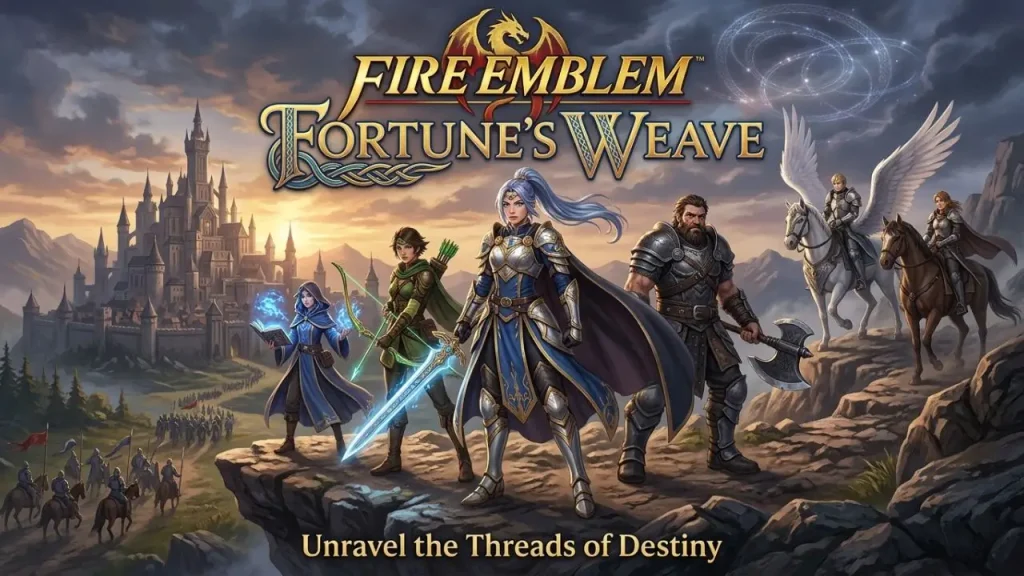
Cai is a young man from the peaceful village of Ribeira. After his father is taken prisoner in Dagsion, Cai enters the Heroic Games. His journey thus begins with a deeply personal aim: to secure his father’s freedom.
Dietrich, by contrast, is driven by a completely different motive. Hailing from a foreign land, he arrives in Dagda following a shipwreck. His focus is not on family matters; instead, he seeks formidable opponents and opportunities to put his combat skills to the test.
Theodora is the Queen of Saramis, a role that entails significant political responsibility. She seeks to honor her goddess, safeguard her people’s faith, and ensure the security of her kingdom. Leda, for her part, has a deeply personal motivation: her father was murdered, and she learns that the alleged killer is set to compete in the Heroic Games.
These four starting points promise a story in which not every character operates according to the same moral or personal compass. Such varied motivations are among the elements that make many of the best story-driven games of all time particularly memorable.This can also make the relationships between the characters more interesting, as personal goals may sometimes clash.
Time Travel and the Threat of Balor
A central element of *Fire Emblem: Fortune’s Weave* is the connection between different time periods. The story unfolds across eras, including a time when the Dagdan Empire is still flourishing, while the future faces the threat of a massive catastrophe.
In the later era—the year 1454—the Empire stands on the brink of collapse. The resurrected demon god Balor threatens to plunge the world into ruin. A soul descends from the heavens and is offered an alternative path by the goddess Fortuna: rather than facing Balor alone, the player must aid heroes from the past and alter their destinies.
In this way, time becomes more than just a narrative device; it is integral to the game’s core mechanics. Decisions made and events that unfold in the past can impact what happens later. Consequently, the player does not merely follow four characters on a linear journey but experiences a story where different points in time are interconnected.
Fortuna and Sothis
Fortuna plays a special role in this context. Nintendo describes her as the Goddess of Fate who aids the protagonist on their journey through time. Sothis, meanwhile, is introduced as the Progenitor God who sends the protagonist and Fortuna on a mission to save the world.
Particularly interesting is the idea that fate in this game is not necessarily set in stone. Initially, the four heroes have their own goals and problems. However, time travel creates the possibility of linking events and bringing about a different course of history.
This concept is especially fitting for a *Fire Emblem* game. For years, the series has explored themes of choices, relationships, loss, and the consequences of battle. *Fortune’s Weave* expands on these themes by questioning whether a seemingly predetermined future must truly be unchangeable.
Tactical Battles with Classic Fire Emblem Elements
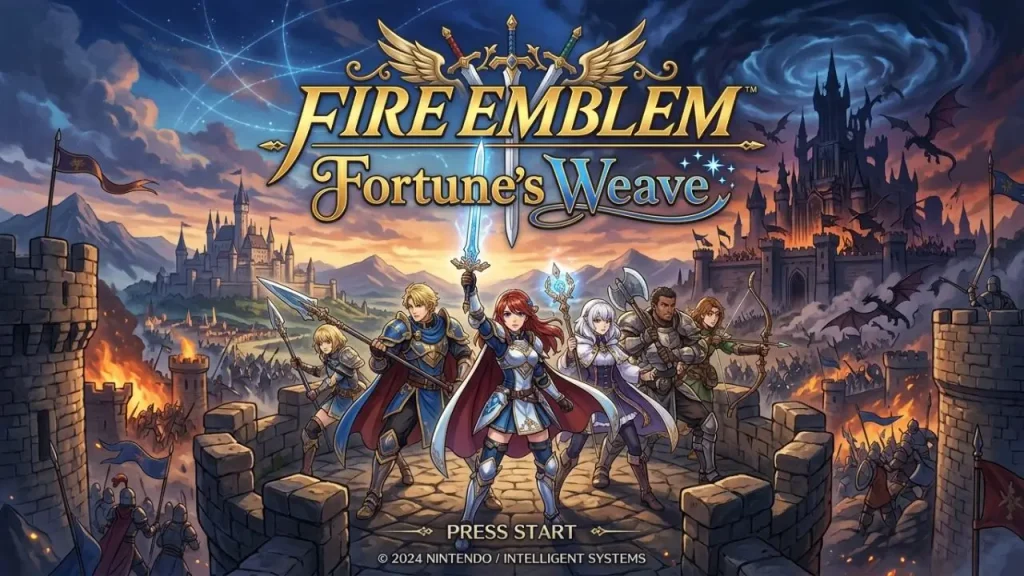
The combat system remains a core component of *Fire Emblem: Fortune’s Weave*. Battles are turn-based; players select their units, position them on the battlefield, and then decide how to attack or respond to enemy actions.
Simply sending a strong unit to the front lines isn’t enough. Factors such as classes, weapons, terrain, and positioning all play a role. Melee attacks function differently than ranged weapons or magic, and the possibility of counterattacks must also be factored into one’s strategy.
Nintendo describes the tactical battles and the heroes’ special abilities in detail in the official information regarding the combat system.
This structure turns every battle into a tactical puzzle. An enemy might appear easily accessible, for instance, while their position simultaneously conceals a dangerous trap. Consequently, players must consider not only which foe to defeat but also where their unit will end up afterward.
Combat Arts and Blaze Arts
In addition to standard attacks, units have access to special abilities. Known as “Combat Arts,” these expand tactical options and can prove decisive in specific situations. They allow players to use conventional attacks more precisely or influence the flow of battle in key moments.
The four main heroes possess additional special abilities called “Blaze Arts.” However, these come at a cost: they consume Hit Points (HP). This creates an interesting trade-off; while a powerful ability can turn the tide of battle, using it might leave the character more vulnerable.
Mechanics like these are a great fit for a strategy game where players must constantly weigh short-term advantages against long-term safety. Simply unleashing a powerful ability at every opportunity isn’t necessarily the best approach; recognizing the right moment to use it is what truly matters.
Exploration, Training, and Character Relationships
Between battles, *Fire Emblem: Fortune’s Weave* offers more than just a standard campaign structure. Players can explore Dagsion, visit training areas, upgrade skills, and recruit new allies. It is also possible to travel beyond the capital to gain experience and strengthen one’s forces.
Those who particularly enjoy character-driven adventures will find similar narrative qualities in Beacon Pines.
This setup creates a distinct contrast to the tactical battles. After a challenging fight, the game does not immediately thrust the player into the next mission; instead, there is time to prepare units and engage with the world.
Such interludes can be particularly important in a *Fire Emblem* game. A unit’s strength does not depend solely on its combat stats; relationships, skills, and the choice of allies also influence how well-prepared the group is for future challenges.
Experiencing Multiple Stories in Parallel
One of the most notable features is the ability to follow the stories of the four main heroes simultaneously. Nintendo explains that, between battles, players can switch between storylines at a location in the city known as “Pale Raven’s Perch.”
This creates a unique narrative structure. Players are not forced to focus entirely on one hero before discovering another’s story; instead, they can switch perspectives and observe how the individual paths gradually intertwine.
This approach also helps in understanding the story from multiple angles. An event that seems mysterious from one character’s perspective might become clearer through the actions of another hero later on. Consequently, the various stories are not merely separate campaigns, but parts of a larger whole.
Why Fire Emblem: Fortune’s Weave Appeals to Strategy Fans
Fire Emblem: Fortune’s Weave combines several elements characteristic of the series: tactical turn-based combat, character progression, relationships, and an expansive fantasy narrative. At the same time, the game introduces a unique focus through time travel and four parallel hero storylines.
The interplay between preparation and combat is particularly compelling. Outside of battle, players can train, recruit allies, and explore the environment. Only then must they prove that their preparations actually pay off. Nintendo therefore describes the “Heroic Games” not merely as a tournament, but as scenarios where preparation directly meets the player’s tactical skills.
The choice of playable character also shapes the personal experience. Cai, Dietrich, Theodora, and Leda each pursue different goals. As a result, a playthrough can feel distinct depending on which character takes center stage.
A game for fans of classic and modern strategy
The developers employ a turn-based system that rewards strategic planning. Terrain, positioning, weapons, and unit classes all play a role in combat. At the same time, the main characters’ unique abilities open up additional tactical options.
This ensures the game is not merely a contest of stats. A higher rating does not automatically mean a unit is the right choice for every position. A strong tactical move might involve luring an opponent, protecting a unit, or deploying a special ability at precisely the right moment.
Then there is the game’s RPG aspect. Training, character development, and relationships add a personal dimension to the units. As a result, the characters are perceived not just as game pieces, but as part of a larger story.
Fire Emblem: Fortune’s Weave on Nintendo Switch 2
Fire Emblem: Fortune’s Weave launches exclusively for Nintendo Switch 2 on September 17, 2026. Nintendo classifies the game as an RPG/strategy title designed for a single player. It supports TV, tabletop, and handheld modes.
The official Nintendo product page also lists an estimated download size of 29.5 GB. Multiple languages are supported, including German, English, French, Italian, Spanish, Japanese, Korean, and Simplified and Traditional Chinese.
For players who value a rich single-player experience, the combination of story, exploration, and tactical combat is particularly appealing. The game is not designed as a traditional multiplayer title; instead, it focuses on a personal journey through four interconnected destinies.
A New Era for the Series
With *Fortune’s Weave*, the *Fire Emblem* The series attempts to blend familiar elements with a unique narrative concept. The “Heroic Games” provide the immediate backdrop for the plot, while Balor and the time-travel storyline lend the adventure a much grander scope.
The four heroes offer distinct entry points into the world: Cai brings a personal rescue mission; Dietrich, a desire for formidable foes; Theodora, her responsibilities as queen; and Leda, her quest for vengeance. These varied motivations allow the central theme of destiny to be explored from multiple perspectives.
Whether one’s interest lies in tactical battles, character-driven stories, or fantasy worlds, *Fire Emblem: Fortune’s Weave* unites these elements in a single adventure. Its release on September 17, 2026, marks the beginning of a new saga that directly links the past and the future.
Conclusion
*Fire Emblem: Fortune’s Weave* delivers an exciting blend of tactical combat, RPG elements, and a story centered on destiny and time. The Dagdan Empire, the Heroic Games, and the four diverse heroes form the foundation of an adventure that intertwines personal goals with a threat to the entire world.
The structure revolving around Cai, Dietrich, Theodora, and Leda is particularly notable. Each character possesses a unique motivation, yet their stories ultimately converge. The inclusion of Fortuna and the mechanic of time travel steers the narrative in an unconventional direction.
Strategic gameplay remains a key focus as well. Positioning, classes, weapons, terrain, Combat Arts, and the special “Blaze Arts” all demand thoughtful decision-making. At the same time, exploration, training, and relationship-building ensure that the time spent between battles is just as significant as the combat itself. Launching on September 17, 2026, for Nintendo Switch 2, *Fire Emblem: Fortune’s Weave* brings a new world, new heroes, and a unique concept of fate to the renowned strategy RPG series.
Frequently Asked Questions
1. What is Fire Emblem: Fortune’s Weave?
Fire Emblem: Fortune’s Weave is a strategy RPG from Nintendo and Intelligent Systems. The game combines turn-based tactical combat with character development, exploration, and a story about four heroes, time travel, and the fate of the world.
2. When will Fire Emblem: Fortune’s Weave be released?
The game launches on September 17, 2026. It is being released for the Nintendo Switch 2.
3. Which characters are the central figures?
The four main heroes are Cai, Dietrich, Theodora, and Leda. Each has their own goals and backstories: Cai wants to save his father, Dietrich seeks strong opponents, Theodora aims to protect her homeland, and Leda is pursuing a personal quest for revenge.
4. How does the combat system work?
Battles are turn-based and focus on tactical positioning. Factors such as classes, weapons, terrain, melee and ranged combat, magic, and special abilities all play a role. The main heroes can also use “Blaze Arts,” though doing so costs HP.
5. Is Fire Emblem: Fortune’s Weave exclusive to the Nintendo Switch 2?
Yes. Nintendo lists Fire Emblem: Fortune’s Weave as a Nintendo Switch 2 title and specifies the Switch 2 as the platform.
6. Does the game feature time travel?
Yes. The plot connects different time periods. Fortuna possesses the ability to travel through time and helps alter the fates of heroes from the past to prevent a future catastrophe.
7. What are the Heroic Games?
The Heroic Games are a major tournament held in Dagsion, the capital of the Dagdan Empire. Fighters from various regions participate, with the winner promised the fulfillment of a single wish.
8. Can the stories of the four heroes be played in parallel?
Yes. Although players control one hero at a time, they can switch between the different storylines and advance multiple narratives simultaneously. 9. What activities are available outside of combat?
9. What activities are available outside of combat?
Players can explore Dagsion, train, improve skills, recruit allies, and build relationships. Areas outside the capital can also be visited to gain experience and strengthen one’s forces.
10. Who is developing Fire Emblem: Fortune’s Weave?
Nintendo is the publisher, while Intelligent Systems is credited as the developer. The game is being released exclusively for the Nintendo Switch 2.