
Few video game franchises have shaped multiple generations as profoundly as Pokémon. When the first Pokémon games were released in Japan in 1996, presumably no one foresaw the cultural phenomenon that would emerge from them. A simple concept centered on collecting, training, and trading creatures evolved into a global universe comprising video games, trading cards, TV series, movies, merchandise, and millions of enthusiastic fans.
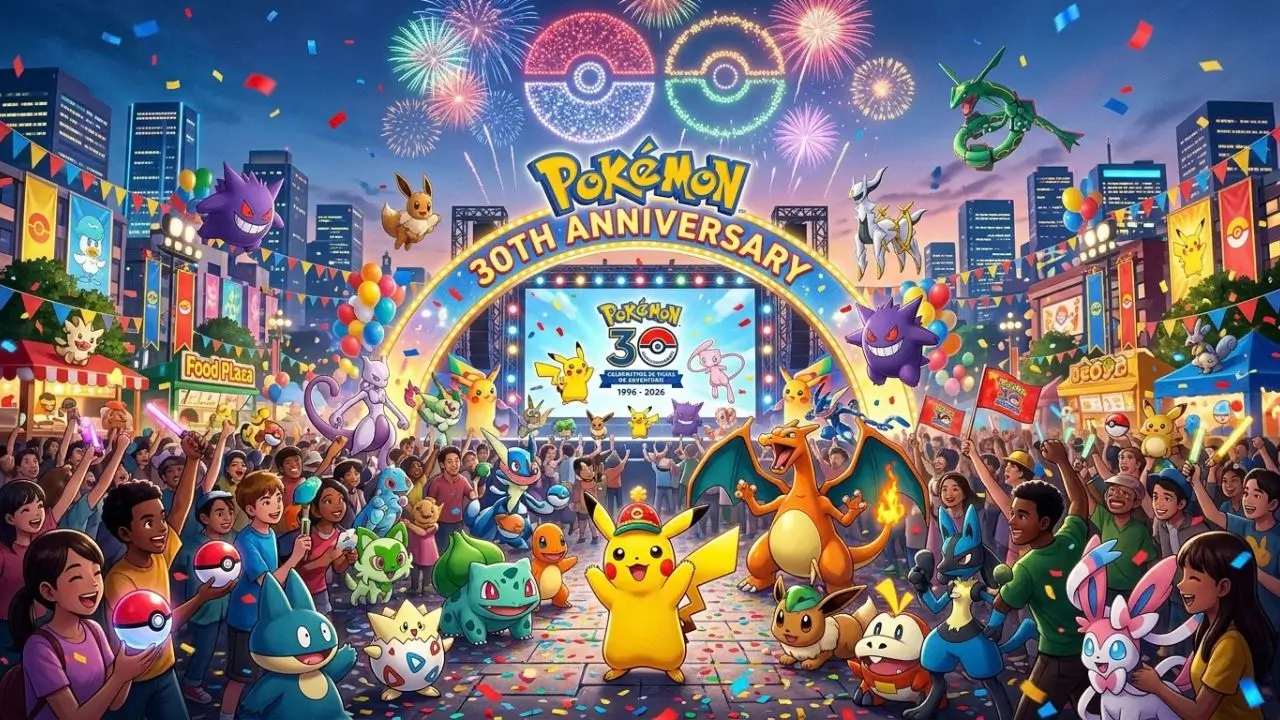
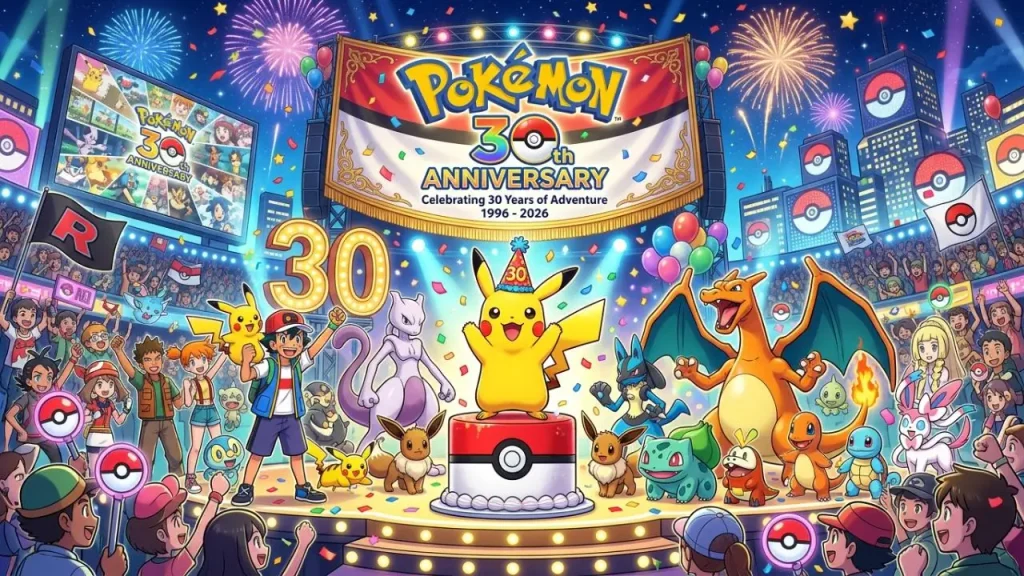
The Pokémon 30th anniversary in 2026 therefore offers a special occasion to look back on this extraordinary journey. Three decades of Pokémon represent far more than just a multitude of new games and Pokémon species; they also embody childhood memories, friendships, thrilling adventures, and a brand that has continually reinvented itself.
Pokémon is one of those games that remain memorable not only for their mechanics but also for their characters and adventures—much like many other story-driven games.
Spanning several console generations, the story ranges from *Red*, *Blue*, and Pikachu to modern games and current developments. But what has made Pokémon so enduring? And why does the brand continue to captivate people who have been part of the journey for decades?
The Origins of Pokémon and the Path to Global Success
The story of Pokémon began with an idea conceived by Satoshi Tajiri. As a child, he had a particular interest in collecting insects. This passion inspired a game concept in which players could discover, collect, and trade various creatures. Together with his development team at Game Freak, he eventually turned this idea into a video game project.
The first Pokémon games for the Game Boy were released in Japan in 1996. *Pokémon Red* and *Green* marked the beginning of the series, while *Red* and *Blue* later became the versions known outside Japan. The core concept was remarkably simple yet highly effective: players could catch and train Pokémon and use them in battles. Trading between different game versions also introduced a social element, extending the gaming experience beyond the individual device.
A crucial factor in the game’s success was the structure of its world. Players were not simply required to complete a linear, predetermined story; they could decide for themselves which Pokémon to catch, which ones to train, and how to assemble their team. Furthermore, the famous objective of completing the Pokédex provided a compelling, long-term incentive to collect.
Why the Game Boy Played a Key Role
Technically, the Game Boy was far simpler than modern game consoles. Yet, it was precisely this limitation that helped Pokémon develop a unique style of its own. The games focused on exploration, battles, characters, and collecting Pokémon rather than on elaborate graphics.
The concept of releasing different versions of the game was particularly clever. Not every Pokémon was available in every version; consequently, anyone wishing to complete their Pokédex had to trade with other players. This transformed a solitary adventure into a communal experience.
This idea became a cornerstone of the entire franchise. Pokémon was not merely a game to be played in isolation; it was something to discuss with friends and a shared journey of discovery.
Three Decades of Pokémon Games and New Generations
Following the success of the first generation, the Pokémon franchise continued to expand. Each new generation introduced fresh regions, characters, Pokémon, and gameplay mechanics. While the games evolved both technically and in terms of gameplay, the core concept remained recognizable.
*Pokémon Gold* and *Silver*, for instance, significantly expanded the game world. They introduced the Johto region and even allowed players to return to the original Kanto region later on. Additionally, these titles added new Pokémon, day-night cycles, and further evolutionary mechanics.
This greater emphasis on exploration is reminiscent of many modern adventure games, in which discovery and the world itself play an important role.
*Pokémon Ruby* and *Sapphire* subsequently introduced the Hoenn region and a new generation of Pokémon. Later entries brought regions such as Sinnoh, Unova, Kalos, Alola, Galar, and Paldea. Each region possessed its own distinct atmosphere and themes that set it apart from previous generations.
From Classic Battles to Modern Game Worlds
The battle system has remained a core component of the series. Elemental types—such as Fire, Water, Grass, Electric, and Psychic—ensure that team selection involves more than just picking the strongest Pokémon; players must consider moves, types, abilities, and opposing strategies.
At the same time, the games have grown increasingly expansive. New forms, evolutions, and special battle mechanics have transformed the classic formula. Features like Mega Evolution, Z-Moves, Dynamax, and Terastallization have demonstrated the diverse ways Pokémon can be presented with each new generation.
*Pokémon Legends: Arceus* also saw greater experimentation with the series’ traditional structure. Exploring a larger world and observing Pokémon directly gave the game a different feel compared to the classic titles.
This evolution shows that the Pokémon franchise has not simply tried to repeat the original formula unchanged. Instead, it has consistently explored how the familiar collecting and battling systems can be adapted to new game worlds.
Pikachu, the Pokémon Series, and Its Impact on Pop Culture
The success of Pokémon was not limited to video games. The animated series introduced the brand to an even wider audience. Ash Ketchum and Pikachu, in particular, became household names—recognized even by people who had never played a Pokémon game themselves.
Pikachu emerged as arguably the brand’s most recognizable face. Small and instantly recognizable, the yellow Pokémon played a central role in the animated series. Its bond with Ash became a key element of the early Pokémon story.
For players who place particular importance on characters, emotional moments, and narrative-driven adventures, such experiences are among the hallmarks of the best story-driven games of all time.
The series also helped add an emotional dimension to the Pokémon world. While the games rely heavily on player choices and battles, the series allowed viewers to follow the characters over an extended period. Friendships, competitions, defeats, and personal growth were just as much a part of the experience as Pokémon battles.
Trading Cards and Movies Expanded the Universe
The Pokémon Trading Card Game also became a vital part of the brand. The cards allowed fans to collect Pokémon and play against one another in a completely different way. Rare cards acquired special collector’s value, making the game appealing even outside the traditional video game scene.
In addition, numerous movies and other animated projects were released. These told stories that often focused on new Pokémon or unique adventures, creating a universe that extended far beyond the original Game Boy games.
For many fans, therefore, Pokémon represents more than just a specific video game series. It can just as easily be associated with a favorite card, an episode of the show, a movie, or a particular game from their childhood.
What makes the Pokémon 30th anniversary special for fans
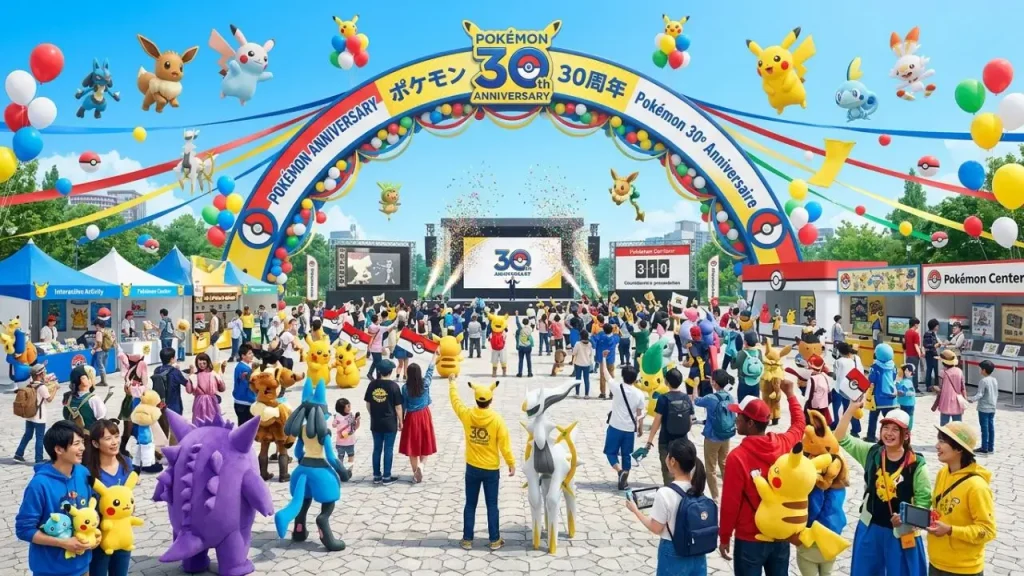
For a brand like Pokémon, a 30th anniversary is more than just a milestone number. Three decades mean that multiple generations have grown up with various Pokémon games. Parents who once played *Red* and *Blue* can now experience the same brand alongside their children.
This very connection between generations is one of Pokémon’s most interesting qualities. A fan might, for instance, link their first memory of the Game Boy to current games. Another player might have first encountered Pokémon through the animated series, trading cards, or mobile games.
The anniversary therefore offers a great opportunity to view the brand’s evolution from various perspectives. Which Pokémon were the initial favorites? Which region left the most lasting impression? Which game was played the most? Such personal memories are a huge part of Pokémon culture.
An anniversary bridging nostalgia and the future
Nostalgia naturally plays a major role when looking back at 30 years of Pokémon. The classic games remind many fans of a time when a Game Boy, a few Pokémon cards, and a Link Cable could provide an entire afternoon of entertainment.
At the same time, it is important to remember that Pokémon remains a modern brand. New games, products, and projects appeal to younger players, while older fans maintain their interest in the classic generations.
It is precisely this blend that makes an anniversary so interesting. It is not solely about looking back; it is also about understanding why a game concept that was originally very simple still offers ample room for new stories and gaming experiences after three decades.
The Significance of Pokémon After 30 Years
Pokémon has shaped the video game industry in several ways. The concept of collecting, trading between players, and the blend of role-playing and strategic battles have become key elements of the gaming landscape.
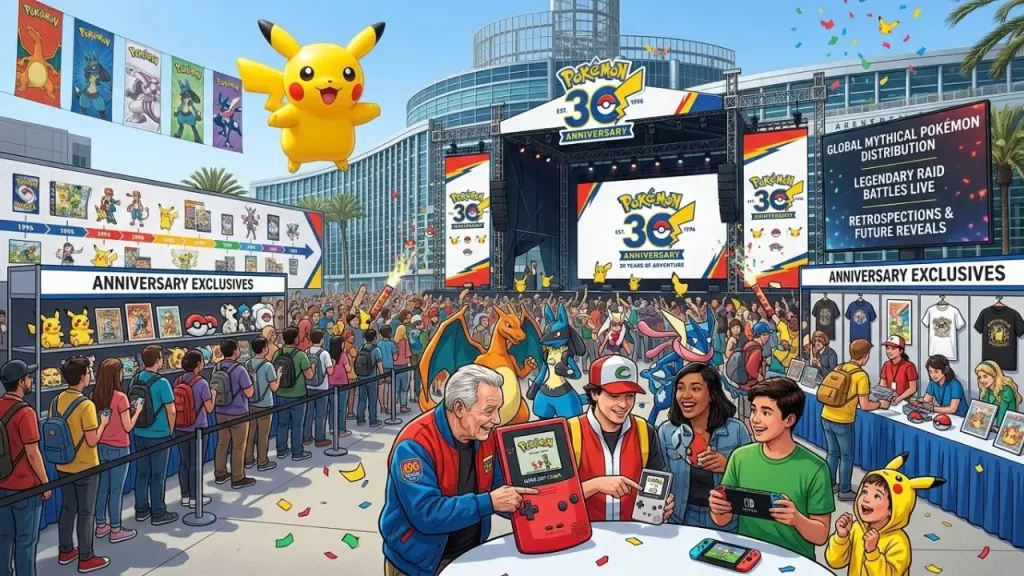
The balance between the familiar and the new is particularly noteworthy. A player familiar with Pokémon since the first generation immediately recognizes fundamental elements. At the same time, a new player can start with a modern generation without necessarily needing to know all the previous games.
This accessibility is a crucial factor in its enduring popularity. Pokémon does not demand the same thing from every player; some people collect as many Pokémon as possible, others are interested in battles, while others enjoy the exploration or the stories.
Why Pokémon Can Remain Relevant in the Future
The brand’s strength lies in more than just individual successful games. Pokémon possesses a vast universe that translates well across various media. Video games, animation, trading cards, collectibles, and other forms of entertainment complement one another.
For the 30th anniversary, it will be particularly interesting to see which elements from the past return and what new ideas emerge. An anniversary can appeal to long-time fans while simultaneously reaching younger players with new content.
The year 2026 is all about the Pokémon 30th anniversary, featuring special events and news for fans worldwide.
In any case, Pokémon’s long history demonstrates that a successful game concept does not necessarily have to be sustained through constant, radical change. Rather, the key lies in combining familiar elements with new experiences.
Conclusion
The Pokémon 30th anniversary marks three decades of one of the most iconic franchises in video game history. Starting with *Pokémon Red* and *Green* on the Game Boy, Pokémon has evolved into a vast universe encompassing games, series, movies, trading cards, and a global fanbase.
The blend of nostalgia and innovation is particularly impressive. The core concept of collecting, training, and trading remains recognizable, even though the games have undergone significant technical and gameplay-related changes.
For long-time fans, the anniversary offers a chance to reminisce about past adventures. For younger players, it serves as an entry point into a world with a history spanning three decades. This is perhaps what makes Pokémon so special: every generation can embark on its own journey while still becoming part of the same grand story.
Frequently Asked Questions about the Pokémon 30th Anniversary
1. When is the Pokémon 30th anniversary?
The Pokémon 30th anniversary falls in 2026, as the first main Pokémon games were released in Japan in 1996.
2. When were the first Pokémon games released?
The first Pokémon games, Pokémon Red and Green, were released in Japan for the Game Boy in 1996. Outside of Japan, Pokémon Red and Blue (among others) were released later.
3. Why is Pikachu the most famous Pokémon?
Pikachu became famous primarily through the animated Pokémon series. As Ash’s partner, Pikachu played a central role and thus became the signature face of the brand.
4. How many Pokémon are there after 30 years?
The number of officially known Pokémon has risen significantly with each generation. The exact figure depends on the specific point in time and the official counting method, as new Pokémon are added with new games and generations.
5. What makes Pokémon still so popular after 30 years?
A key factor is the blend of collecting, exploration, strategy, and the personal connection players form with their own Pokémon. At the same time, new generations can discover the core concept, while long-time fans associate their own memories with the series.