
Introduction
The Hollow Knight bosses are among the game’s standout features. In Hallownest, a new challenge awaits just beyond almost every major discovery. Some bosses are slow and predictable, while others pressure the player with rapid movements, surprise attacks, and multiple combat phases. It is precisely this variety that makes the boss battles so thrilling.
A good boss fight in Hollow Knight isn’t simply about striking as quickly as possible. You have to observe, dodge, wait for the right moment, and learn which attacks leave the boss open to a safe counter-attack. Consequently, players often fail several times when facing a tough opponent for the first time. Yet, every attempt yields new information; gradually, you recognize movement patterns and develop your own strategy.
Hollow Knight is interesting not only for its challenging combat but also for its world and the way the story is told through exploration. This makes the game a strong example of a story-driven game.
The world of Hallownest also offers a wide array of bosses. Some are essential for game progression, while others are hidden challenges. There are also optional encounters, Dream battles, and particularly formidable foes found in the game’s later stages. In this guide, we take a closer look at the key Hollow Knight bosses, explaining what makes them unique and how to prepare for the fights ahead.
Key Hollow Knight Bosses and What Makes Them Unique
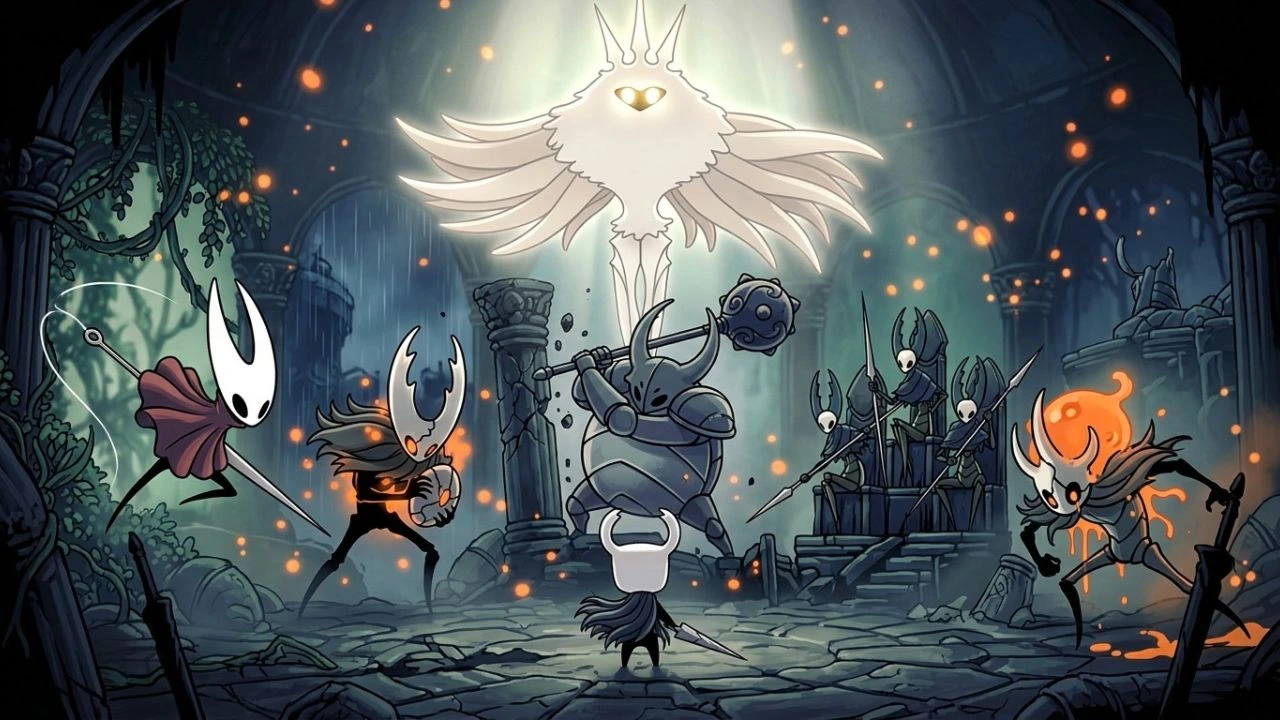
One of the most well-known early bosses is the False Knight. The battle takes place in a large arena and serves as a great introduction to the fundamental mechanics of boss fights. The opponent slams his heavy mace into the ground, creating dangerous shockwaves. Reacting too hastily can easily lead to taking a hit; patience is more important here than blindly rushing in to attack.
After landing a few successful hits, the fight reveals its first major twist: the true enemy isn’t simply sitting inside the armor as it initially appears. The player must recognize when a safe opportunity for further attacks arises. Consequently, the False Knight is less a test of speed and more a test of timing and attentiveness. Recognizing his attacks early allows the player to maintain much better control over the fight.
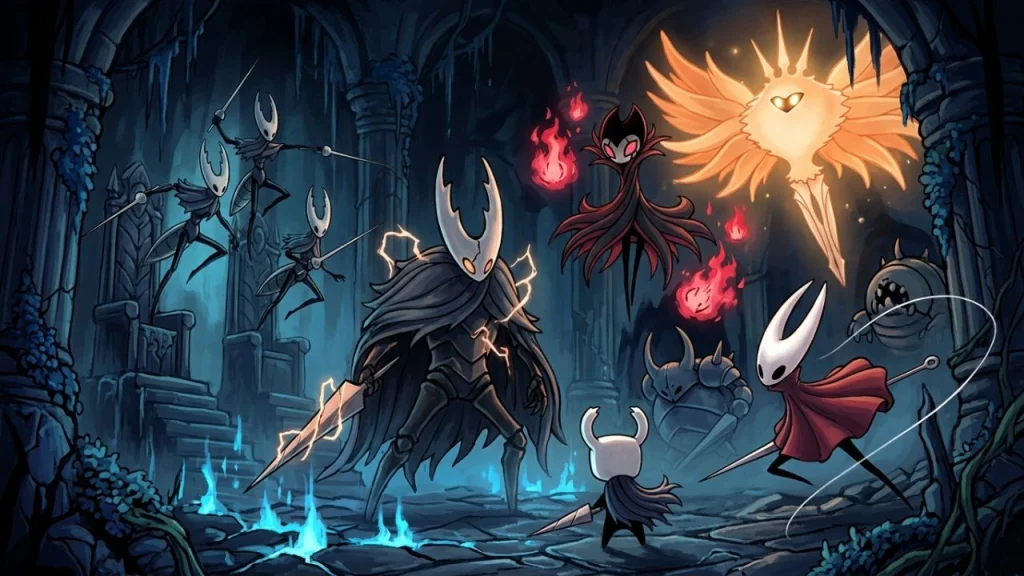
Another early encounter is the battle against Hornet. Hornet is significantly faster and more agile than many other early-game enemies. She leaps across the arena, throws her weapon, and suddenly lunges toward the Knight. This creates a battle where constant movement and good positioning play a crucial role.
What makes this fight particularly interesting is that Hornet simultaneously prepares the player for future challenges. You have to learn to anticipate attacks based not just on the enemy’s current position, but also on their movement. For instance, attacking too early might cause you to run straight into a counterattack. As a result, the fight feels fast-paced and dynamic, yet remains easy to follow with a little practice.
Why Boss Fights in Hollow Knight Work So Well
The strength of many encounters lies in the fact that, despite their varied designs, the bosses follow clear patterns. An attack might seem chaotic at first, but after a few attempts, players usually recognize a specific sequence or a distinct tell. This makes victory feel truly earned.
The arena itself plays a crucial role, too. Its size, platforms, and obstacles alter how a boss can be fought. With some enemies, having plenty of space is an advantage, whereas with others, navigating the arena becomes a challenge in itself. This adds variety to the battles without requiring complex controls.
Mid-Tier Bosses: Increased Speed and Pressure
As the game progresses, Hollow Knight’s bosses become significantly more demanding. The Mantis Lords are a prime example; the fight requires quick reflexes and precise movement above all else. Initially, the player faces a single opponent, but the pace intensifies later on as multiple Mantis Lords attack simultaneously.
This is a perfect illustration of how Hollow Knight ramps up the difficulty. The attacks are fast but not random; enemies strike from specific directions and usually give the player a brief window to react. Players who try to capitalize on every opening for a hit are often punished. Consequently, successful players learn that a safe dodge is sometimes more important than squeezing in an extra attack.
The Soul Warrior battles and other challenging encounters in Hallownest introduce new movement patterns. Enemies may suddenly leap across the arena, use projectiles, or appear from various directions, forcing the player to constantly keep track of their own positioning.
It is particularly helpful not to focus solely on your own character. Experienced players watch the boss’s movements and react to its animations; a split-second before an attack can reveal what is coming next. Recognizing these cues reduces the need for improvisation and allows for a much calmer playstyle.
The Battle Against Broken Vessel
Broken Vessel is another prime example of a boss fight where movement is crucial. The enemy employs rapid leaps and aggressive attacks, while smaller foes may also spawn, requiring the player to keep an eye on more than just the boss itself.
A common challenge is that the fight can quickly become chaotic. Panicking and simply continuing to attack often leads to a loss of control. It is better to seek out safe positions first and strike only after the boss has finished an attack. Healing should also be timed carefully, as a mistake in timing can be punished immediately.
Challenging and Optional Hollow Knight Bosses
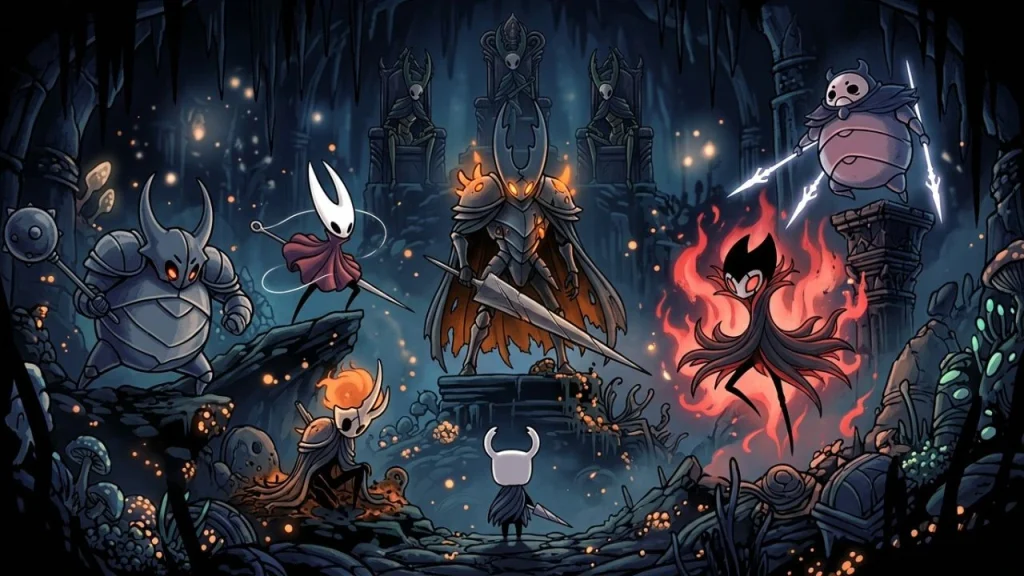
Later in the game, you encounter bosses that pose significantly greater challenges. One such example is the Soul Master. This foe combines teleportation, rapid movement, and various spell-based attacks, meaning you cannot simply stand in one spot and wait for the next opening.
The Soul Master fight is also notable for the way it deliberately tricks the player. Certain movements look similar but result in different attacks; reacting too quickly can cause you to run straight into a strike. The key is to wait for the boss to complete his movement before deciding whether to jump, dodge, or attack.
The Dung Defender also offers a completely different combat style. He moves partly beneath the surface, resurfacing at various locations. While his attacks seem unusual at first, they are easy to understand after a little observation. This battle highlights the impressive variety of boss designs found in Hallownest.
The atmosphere is particularly compelling. The Dung Defender does not come across as a typical, grim villain; his behavior and personality give the fight a unique character. Hollow Knight frequently succeeds in conveying a story or a specific mood, even during difficult boss encounters.
Dream Battles and Enhanced Variants
Dream Warriors and other dream-based encounters constitute a special category of battles. These encounters can function quite differently from standard boss fights; some opponents gain new attacks or become faster and more dangerous, forcing players to relearn familiar patterns.
The advantage of these battles is that the enemies do not simply possess more health. An enhanced variant can develop a completely different rhythm. An attack that was easy to avoid in a standard fight might suddenly occur more frequently or appear as part of a new combination.
Consequently, anyone wishing to experience everything *Hollow Knight* has to offer will find it hard to skip these optional battles. They particularly reward players who have already learned to fight patiently and observe movements closely.
The Toughest Bosses in Hollow Knight
Nightmare King Grimm is among the most notorious adversaries. Many players consider this battle one of the game’s greatest challenges. Grimm moves at lightning speed and employs a series of attacks that leave only narrow windows for reaction. At the same time, the fight—with its animations and music—feels almost like a perfectly choreographed performance.
Success against Nightmare King Grimm relies less on aggressive damage output and more on control. You must recognize each attack before reacting. For instance, Grimm can dash rapidly across the arena, conjure projectiles, or strike from various directions. Those unfamiliar with his movements will often find themselves taking damage within mere seconds.
With practice, however, it becomes clear that the fight follows a set pattern. This is precisely one of *Hollow Knight*’s greatest strengths: a boss can seem incredibly difficult yet remain fair. Players do not lose simply due to random chance; there is usually a discernible reason for taking a hit.
Another particularly demanding opponent is the Pure Vessel. This battle requires quick reflexes, precise timing, and exacting control over your positioning. The Pure Vessel is the type of enemy where even minor mistakes can have major consequences.
Attacks come quickly and can be chained together. Consequently, you shouldn’t try to land as many consecutive hits as possible; a single, sure hit is often better than three risky attacks. Approaching the fight as a test of patience significantly improves your chances of success.
Absolute Radiance
Absolute Radiance awaits players who want to master every single challenge. Linked to the game’s most demanding content, this battle ranks among the toughest encounters *Hollow Knight* has to offer.
Absolute Radiance demands more than just quick reflexes. Players must also contend with platforms, projectiles, shifting positions, and multiple combat phases. A single mistake can easily lead to taking further hits, making it crucial to stay calm and avoid panic.
The fight serves as a striking example of how much a player’s skills can evolve over the course of the game. Maneuvers that seemed difficult against early bosses become fundamental tools here; dashing, jumping, attacking, and healing must all become second nature.
Tips for Defeating Hollow Knight Bosses
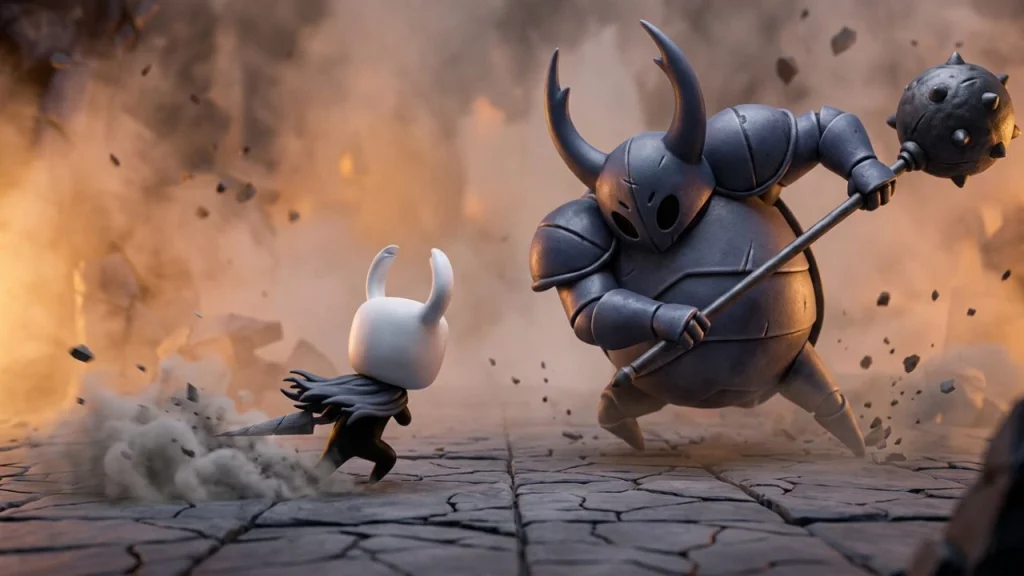
The most important tip for Hollow Knight bosses is: observe first, then attack. Especially when facing a new enemy, it makes sense not to focus solely on dealing damage during your initial attempts. Instead, you can concentrate on learning the specific attacks. Where does the attack come from? How long does it last? Where does the boss land afterward?
This approach saves a lot of time in the long run. For instance, if you realize a boss is vulnerable for a brief moment after a specific attack, you can capitalize on that exact window. This makes the fight more manageable, so you don’t have to rely on blind luck when swinging your weapon.
Your choice of Charms can also make a huge difference. Depending on the boss, prioritizing healing capabilities, increased melee damage, or enhanced mobility might be beneficial. There is no single perfect combination for every enemy; much depends on your personal playstyle.
If you find yourself getting hit frequently, you might want to try a more defensive setup. Conversely, players who are skilled at dodging attacks can focus more on dealing damage. The key is ensuring your loadout suits your playstyle rather than simply looking powerful on paper.
Using Healing Effectively
Many players lose boss fights not because they lack damage output, but because they heal at the wrong moment. Healing takes a few moments, and a boss can instantly exploit that brief pause. Therefore, you should wait until you have a safe distance or a clear break in the boss’s attacks.
The free Lifeblood update brought, among other things, a new boss as well as improvements and adjustments to the game.
Sometimes, it is better to continue fighting with low health than to attempt a risky heal. This might sound strange at first, but it can be crucial when facing fast-moving bosses. With experience, you will learn to recognize when it is truly safe to heal.
Not Every Attempt Needs to Succeed
In *Hollow Knight*, losing a fight does not automatically mean you are ill-prepared. Some bosses are intentionally designed to require multiple attempts. Each attempt can help you understand a new attack or find a better position.
You should pay attention to small signs of progress, especially against the toughest enemies. Perhaps you only make it through part of the fight on the first attempt, but reach a further phase on the next. This is exactly how your skills improve. Eventually, a boss that initially seemed impossible will suddenly feel surprisingly manageable.
Why Boss Battles Make Hollow Knight Unforgettable

The Hollow Knight bosses are more than just simple obstacles separating different areas. They are a vital part of the atmosphere and reveal details about the world of Hallownest in various ways. Some foes seem tragic, others mysterious, and some even humorous. Their designs often harmonize with the locations where they are encountered.
The battles also differ from one another both musically and visually. A boss in a gloomy area creates a different mood than a fight in an open or unusual setting. As a result, many encounters remain memorable long after the player has finished the battle.
Another factor contributing to the quality of the boss battles is the sense of progression. Early on, even basic attacks can prove challenging. Later, the player learns to read movements, use dashes strategically, and assess dangerous situations more quickly.
The combination of atmosphere, exploration, and hidden history serves as a reminder of why certain titles appear on lists of the best story games of all time.
Ultimately, personal progress is reflected not only in the character’s new abilities but also in the player’s own growth. An attack one once fled from can later be dodged with ease. A boss that initially required multiple attempts may eventually feel like a routine encounter.
This is what makes Hollow Knight so deeply satisfying. The difficulty isn’t there merely to extend the game’s length; it challenges the player to improve. Consequently, every defeated boss serves as a small testament to one’s growing understanding of Hallownest.
Conclusion
The *Hollow Knight bosses* are among the game’s strongest and most varied elements. The challenge escalates gradually, ranging from early encounters with the False Knight and Hornet to incredibly difficult battles against the likes of Nightmare King Grimm, the Pure Vessel, and the Absolute Radiance.
What makes these fights special is their fairness. While the opponents can be brutally tough, their attacks generally follow recognizable patterns. By observing closely, remaining patient, and analyzing one’s mistakes, it is possible to gain a better understanding of every fight.
Ultimately, the key to success isn’t simply dealing more damage, but mastering timing. Learn the boss’s movements, identify safe windows to attack, and heal only when the situation permits. With a little patience, a seemingly impossible opponent transforms into a challenge that can truly be mastered.
Frequently Asked Questions About Hollow Knight Bosses
1. How many bosses are there in Hollow Knight?
The exact number depends on which encounters you count as bosses. The game features standard bosses, optional foes, dream battles, and stronger variants of certain enemies. Consequently, the total count can vary depending on the criteria used.
2. Which boss is particularly difficult for beginners?
That depends heavily on individual player experience. Hornet, for instance, can be tricky for beginners because she is fast and agile. The Mantis Lords can also pose a major challenge, as the fight demands good timing and quick reactions.
3. What is the hardest boss in Hollow Knight?
For many players, Nightmare King Grimm, Pure Vessel, and Absolute Radiance rank among the most demanding battles. Absolute Radiance, in particular, places high demands on reaction time, movement, and concentration.
4. Can you fight bosses again later in Hollow Knight?
Yes. Certain game content allows you to replay various boss battles. Additionally, some encounters reappear in altered forms within special dream sequences or endgame challenges.
5. Which Charms are useful against bosses?
That depends on the specific boss and your personal playstyle. Charms that increase damage, aid in healing, or enhance specific abilities can be helpful. It is worth experimenting with different combinations.