
Introduction
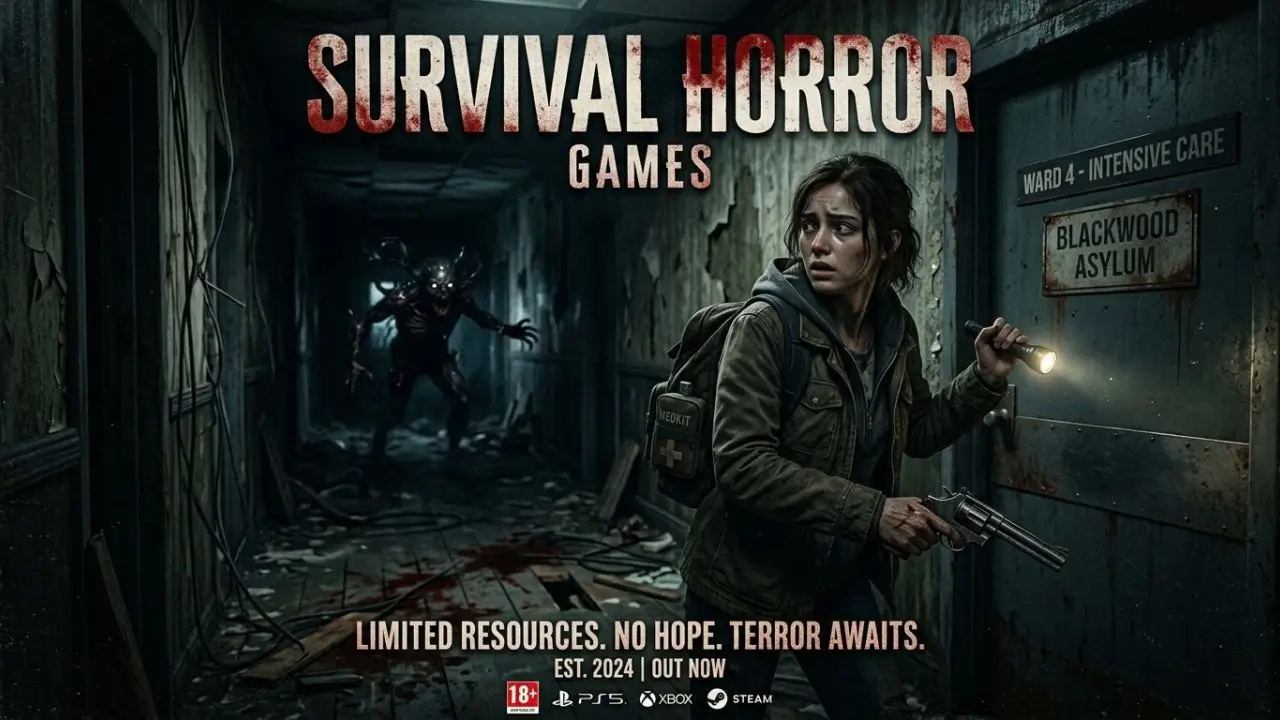
Survival horror games combine fear, suspense, and the struggle for survival. Unlike standard action games, the goal isn’t simply to defeat as many enemies as possible. Ammunition, healing items, and other essential supplies are often scarce, forcing players to carefully weigh when to fight and when it is better to run.
In typical games of this genre, players explore dark houses, abandoned cities, hospitals, or other perilous locations. Puzzles, hidden clues, and eerie narratives are often just as integral to the experience as monsters and combat. Renowned franchises like *Resident Evil* and *Silent Hill* have played a pivotal role in shaping the genre. Modern titles blend these classic elements with enhanced graphics, superior sound design, and innovative gameplay mechanics.
Many horror titles are also story-driven games, in which the story is an important part of the gaming experience.
In this article, you will learn what truly defines survival horror, the different types of games available, what to look for when choosing a title, and how to improve your gameplay.
Table of Contents
- What Are Survival Horror Games?
- What Makes a Good Survival Horror Game?
- Types of Survival Horror and Notable Examples
- Pros, Cons, and Key Tips
- How to Find the Right Survival Horror Game?
What Are Survival Horror Games?
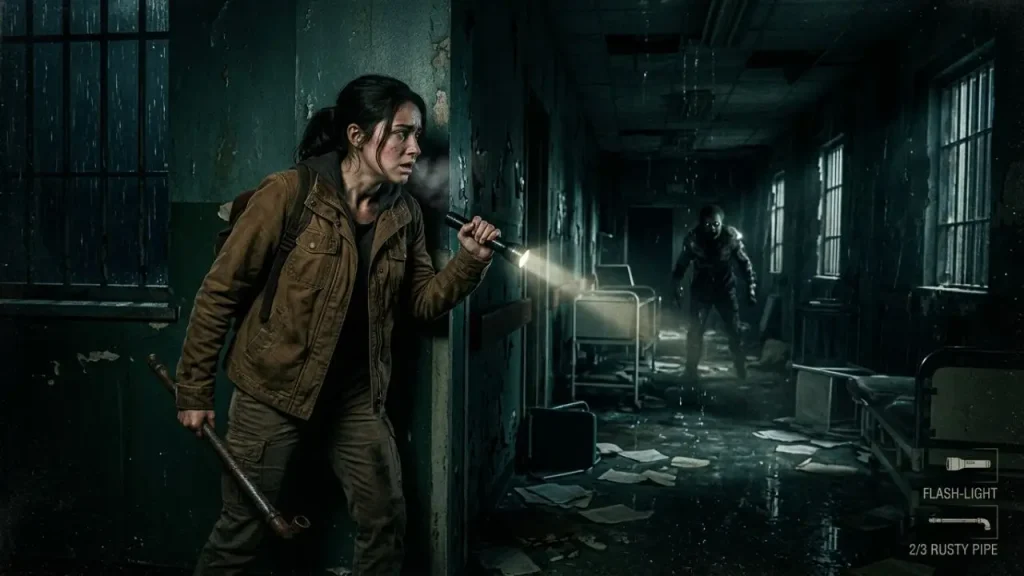
Survival horror is a video game genre centered on survival and fear. Players usually find themselves in a dangerous location and must uncover what has happened, all while monsters, traps, and other perils lurk nearby.
A key difference from many action games is the limitation of resources. You might have only a few rounds of ammunition and a small first-aid kit. Attacking every creature immediately could leave you lacking something vital later on; consequently, making strategic choices and playing cautiously are integral parts of the genre.
Fear Comes from More Than Just Monsters
A good horror game doesn’t need to constantly show an enemy. Often, a dark hallway is enough. You hear footsteps but don’t know where they are coming from. Perhaps a light flickers or a door suddenly moves.
Sound and atmosphere are therefore crucial. Quiet noises can sometimes generate more tension than a massive monster. Music, footsteps, wind, screams, and sudden silence all help build an eerie mood.
The environment often tells part of the story, too. An abandoned hospital, an old house, or a fog-shrouded town can offer clues about the characters’ pasts.
Why Resources Matter
In many games, you have to use your items sparingly. Typical resources include:
Ammunition
Healing items
Weapons
Batteries
Keys
Special puzzle items
This creates added pressure. If you have only three rounds left and don’t know what awaits behind the next door, you have to make a decision.
It is precisely this feeling that sets survival horror apart from many straightforward action games. It isn’t always about being stronger; making good decisions can be more important than having quick reflexes.
What makes a good survival horror game?
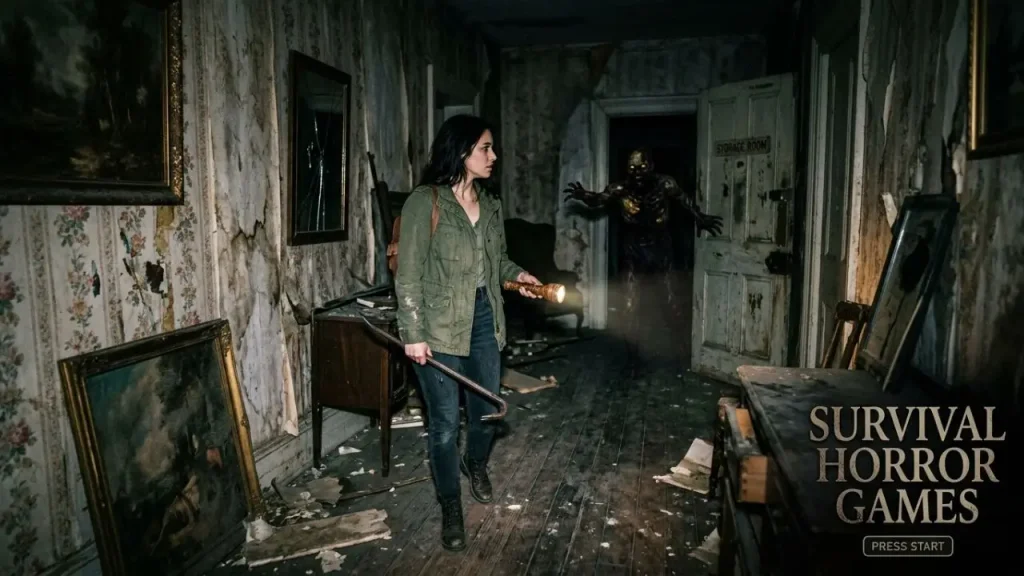
A strong survival horror game requires several elements that work well together. Good graphics alone aren’t enough; a game can look very modern yet fail to generate much tension. The interplay between atmosphere, story, gameplay, and sound is crucial.
Atmosphere and exploration
The world should spark curiosity while simultaneously feeling dangerous. Many great games don’t give the player all the answers right away. You discover notes, items, rooms, and clues, gradually piecing the story together.
Exploration is also important. You might find an important item behind a locked door; to open it, you first have to search for a key. Once you do, you might discover a new area.
This system ensures that the player remains attentive.
Puzzles and Choices
Puzzles are a standard part of the gameplay in many games of this genre. They can be very simple—such as finding a key—while other tasks require more attention.
Good puzzles should fit the game naturally rather than just artificially extending playtime. Finding a solution feels particularly satisfying when a clue was already hidden in the environment.
Some modern survival horror games also incorporate choices. For instance, a player might choose whether to investigate a specific room or move on. Such decisions can influence the story or specific situations.
Combat Is Not Always the Best Solution
In a typical action game, defeating many enemies often makes the player feel powerful. Survival horror works differently.
Sometimes, running away is the smarter choice. An opponent might be too strong or require too much ammunition. If you don’t have to defeat them, you might just be able to run past them.
This makes the battles more tense. Every bullet can be crucial.
| Element | Survival Horror | Classic Action Game |
| Ammunition | Often limited | Usually more generous |
| Enemies | Threatening and dangerous | Usually designed for combat |
| Exploration | Very important | Varies depending on the game |
| Puzzles | Frequently included | Often less important |
| Atmosphere | Very important | Can be less important |
| Running Away | Often a smart choice | Usually less important |
| Resources | Need to be carefully managed | Often easier to obtain |
Types of Survival Horror and Notable Examples
Survival horror takes many forms. Some games focus on psychological dread, while others center on monsters, combat, or stealth. This variety makes the genre appealing to a wide range of players.
Classic Survival Horror
The classic style often emphasizes limited resources, exploration, puzzles, and fixed locations. *Resident Evil* is one of the most famous examples of this type.
In *Resident Evil 7 biohazard*, players experience the story from a first-person perspective and explore, among other areas, a dangerous estate. The game is explicitly classified as a survival horror title by the ESRB and features elements such as intense violence and gore.
Psychological Horror
Psychological horror relies more heavily on atmosphere, uncertainty, and narrative. Not every source of terror needs to be immediately visible.
The *Silent Hill* series is a well-known example of this. *SILENT HILL f* combines psychological horror with a story set in 1960s Japan. Players explore a fog-shrouded town, solve puzzles, and battle eerie creatures.
Action-Oriented Horror
Some games offer the player significantly more combat options. Nevertheless, horror, exploration, and dangerous situations remain key elements.
Resident Evil 4 is a prime example of this. The game blends survival horror with heightened action and combat against infected humans and other creatures.
Stealth and Hiding-Based Horror
In this subgenre, combat is often not the primary option. Instead, you must hide, move quietly, and wait for the right moment.
This can be particularly tense, as you cannot simply defend yourself against a powerful enemy with a weapon. You have to observe their movements and find a safe path.
New Games and Modern Horror Experiences
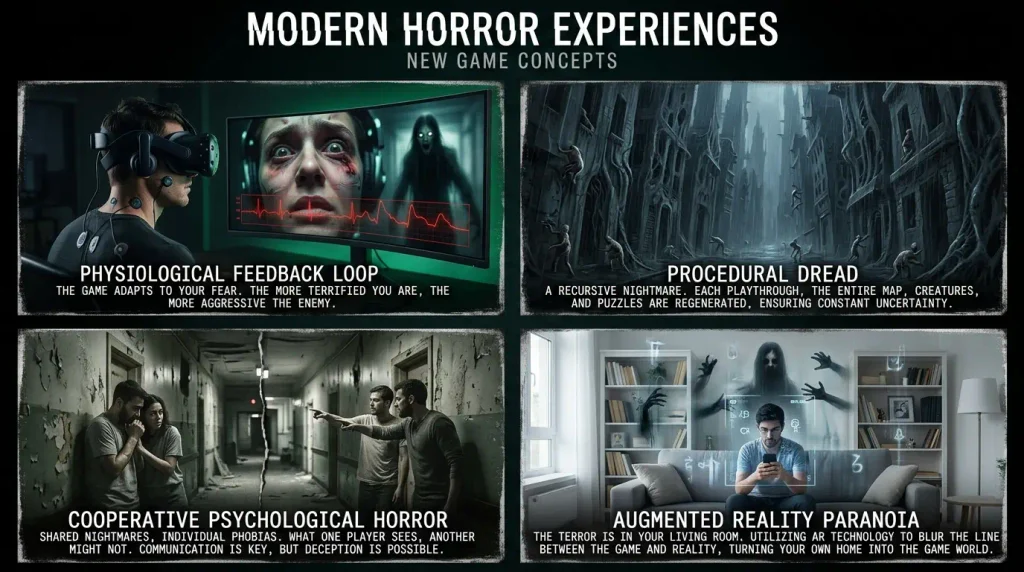
The genre continues to evolve. Modern games utilize superior lighting, more realistic sound design, detailed environments, and more complex narratives.
A recent example is SILENT HILL f. Released in 2025, the game is available for PlayStation 5, Xbox Series X|S, and PC.
This demonstrates that survival horror is not limited to older titles. While the core principles remain similar, developers are able to incorporate new ideas and modern technology.
Pros, Cons, and Key Tips
Survival horror can be a highly intense gaming experience. At the same time, the genre isn’t for everyone; some players love slow-building tension, while others prefer fast-paced action.
Pros of Survival Horror
Some of the genre’s greatest strengths include:
engaging stories
powerful atmosphere
interesting puzzles
exploration
tactical combat
scarce resources
surprising moments
a strong sense of survival
The genre works particularly well if you enjoy playing attentively. You need to observe your surroundings and sometimes think things through before acting.
Cons of the Genre
However, there are some downsides. Some games are very slow-paced; if you are expecting fast action, long stretches of exploration might feel tedious.
Backtracking can also be a nuisance. This refers to having to return to a previous location to use a new item.
Additionally, horror games can be very graphic. You should therefore check the age rating and content descriptors before buying. The ESRB, for example, details content such as violence, gore, language, or other themes present in a game.
Tips for Beginners
If you are playing a survival horror game for the first time, a few simple rules can help:
- Don’t waste every bullet. Fight only when it is truly necessary.
- Observe your surroundings. Doors, notes, and objects can contain important clues.
3.Save regularly if the game allows it.
4.Use the map and inventory. They help ensure you don’t overlook important areas.
5. Don’t panic. Staying calm is helpful, especially in difficult situations.
6.Pay attention to sounds. Footsteps or other noises can signal the presence of enemies.
7.Manage your resources. Avoid using healing items and ammunition unnecessarily.
A common mistake is leaving a room too quickly. In many games, a seemingly unimportant room might later turn out to contain a crucial item or clue.
How do you find the right survival horror game?
The best game for you depends on the type of horror you enjoy. There is no single style that works for every player.
You can find the latest platform and product information on the official KONAMI website.
If you like combat and action, you should look for games with a more robust combat system. Conversely, if you prefer puzzles and atmosphere, slower-paced games are likely a better fit.
For players who enjoy psychological horror, games with a strong narrative can be appealing. Those who prefer to avoid enemies should look for stealth or hiding mechanics.
What should you look for when buying?
You can check the following points before purchasing:
Which platform is supported?
Is the game action-packed or slow-paced?
Are there many puzzles?
How intense is the violence?
Is there an age rating?
How long is the story?
Are there multiple difficulty levels?
Is controller support included?
Is there a single-player campaign?
Does the game require an internet connection?
The age rating shouldn’t be ignored, either. It can quickly tell you whether a game is suitable for a specific age group. The ESRB offers a searchable database containing ratings and content summaries for many games.
Who is this genre for?
Survival horror is a particularly good fit for players who:
enjoy discovering stories,
solve puzzles,
explore at a leisurely pace,
like suspense,
plan around limited resources,
and enjoy being surprised.
If, on the other hand, you are primarily looking for fast-paced multiplayer action, a classic action or multiplayer game might better suit your expectations.
Conclusion
Survival horror games are more than just games featuring monsters and jump scares. Their unique appeal stems from a blend of fear, exploration, puzzles, scarce resources, and compelling stories. Good games do not always immediately provide the player with the most powerful weapon; instead, players must make strategic choices.
There is a wide variety of styles, ranging from classic survival horror and psychological narratives to action-packed titles. *Resident Evil* demonstrates how horror and combat can be combined, whereas *Silent Hill* focuses more heavily on psychological tension and atmosphere.
Those new to the genre should start slowly and choose a game that suits their personal taste. Age ratings and content descriptions are also particularly important. This transforms a simple horror game into an engaging experience where exploration, planning, and survival truly matter.
FAQs
1. What are survival horror games?
Survival horror games are video games in which survival, fear, exploration, and resource management play key roles. They often feature puzzles, dangerous enemies, and limited supplies of ammunition or healing items.
2. What is the difference between horror and survival horror?
In standard horror games, the focus is often on fear itself. Survival horror places additional emphasis on survival, resources, exploration, and decision-making. Consequently, you often have to think carefully before you act.
3. Are survival horror games suitable for children?
That depends on the specific game. Some contain intense violence, gore, or other adult-oriented content. Therefore, you should always check the age rating and content description before playing. The ESRB provides this information for many games.
4. Do you always have to fight in survival horror games?
No. In many games, running away or hiding is sometimes the better option. Especially when ammunition is scarce, it may make sense to avoid fighting an enemy.
5. Which survival horror game is suitable for beginners?
That depends on your preferred playstyle. If you enjoy action, you might choose a game that focuses more on combat. If you prefer atmosphere and puzzles, you should try a slower-paced horror adventure. Before buying, checking trailers, age ratings, and descriptions of game mechanics can help you make the right choice.