

Introduction
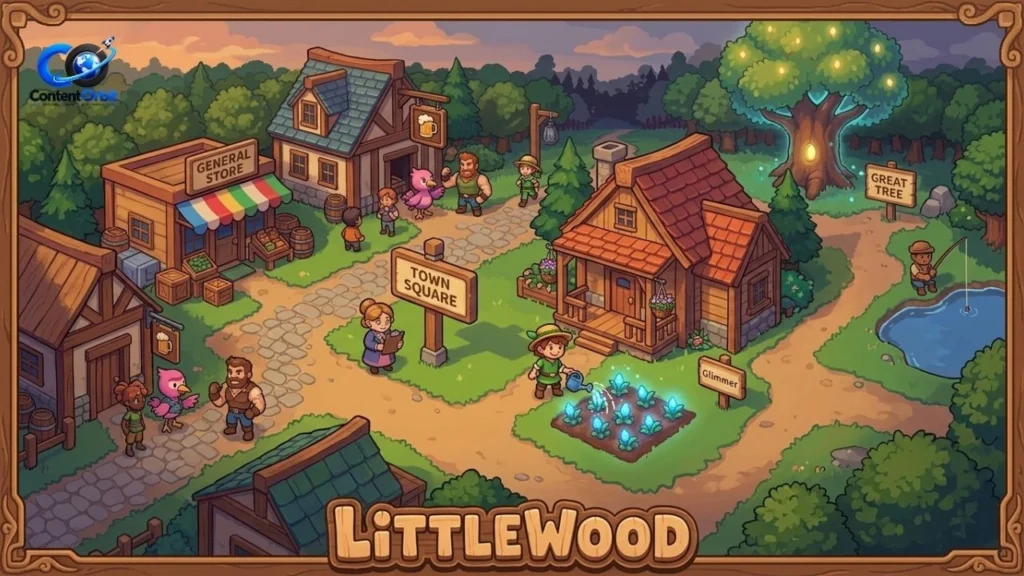
Littlewood game is a peaceful pixel-art RPG where the biggest adventure has already happened. You have defeated the Dark Wizard, saved the world, and now have a different job: rebuild a town and create a new life. Instead of spending most of your time fighting enemies, you gather materials, build homes, meet townsfolk, fish, farm, cook, craft items, and explore the world of Solemn.
Developed by Sean Young and published by SmashGames, Littlewood officially released on August 4, 2020, after an Early Access period. It mixes role-playing, life simulation, farming, crafting, exploration, and town-building into one relaxing experience. The game is single-player and is available on PC and Nintendo Switch.
If you enjoy games where you can play at your own speed, decorate your town, make friends, and slowly unlock new activities, Littlewood is worth knowing about. This guide explains how the game works, what makes it special, its strengths and weaknesses, and who should play it.
Table of Contents
- What Is Littlewood?
- How Littlewood Gameplay Works
- Town Building, Farming, and Other Activities
- Characters, Relationships, and Progression
- Is Littlewood Worth Playing?
What Is Littlewood?
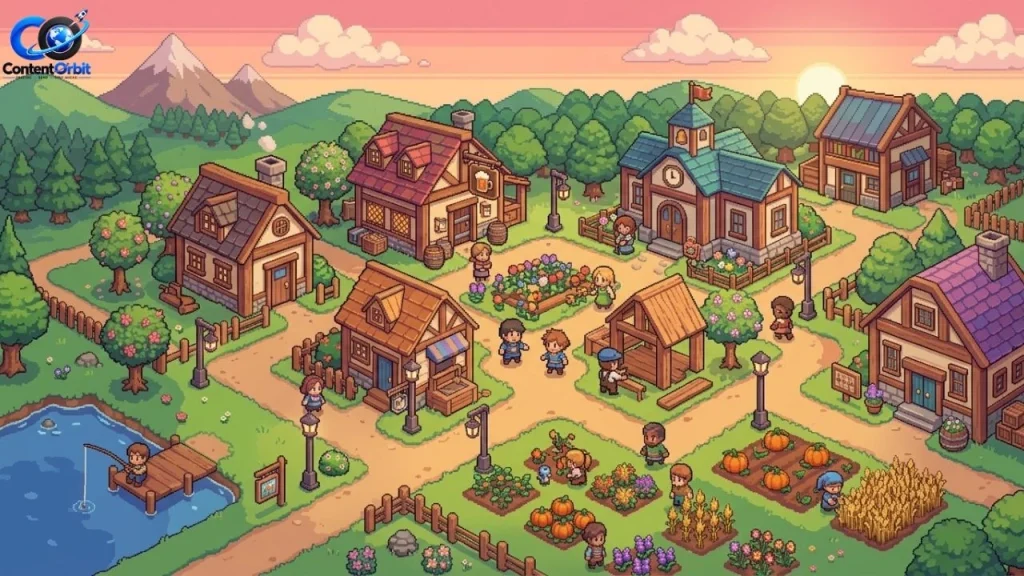
Littlewood takes place after the hero has already defeated the Dark Wizard. The world is peaceful, but the hero has lost most of their memories. Instead of starting another huge battle, you help rebuild a town and discover more about the past along the way. This unusual setup gives the game a calm feeling while still giving you goals to work toward.
The town is the heart of the experience. You can decide where buildings, homes, decorations, trees, paths, and other objects should go. As new townsfolk arrive, more buildings and activities become available. Some residents also have specific wishes about where and how their homes should be placed, so town design can become part of your progression.
A Different Kind of RPG
Traditional RPGs often focus on battles, powerful weapons, quests, and defeating bosses. Littlewood takes a different approach. It still has RPG elements, but the main challenge is managing your time, improving skills, collecting materials, and developing your town.
The game includes several hobbies and skills, including farming, fishing, mining, woodcutting, bug catching, gathering, cooking, crafting, and merchanting. There is also a card-based activity called Tarott Monster, giving players something different to do when they want a break from town work.
This makes Littlewood a good choice for players who enjoy progress without constant pressure.
How Littlewood Gameplay Works
The basic gameplay loop is simple. You start a day, decide what you want to accomplish, spend your available energy on activities, collect useful resources, and use those resources to improve your character or town.
For example, you might spend part of a day cutting trees for wood. Later, you could use that wood to create materials for a new building. You may then talk to a townsperson or complete a request before finishing the day. The next day brings another chance to gather resources, improve skills, and continue expanding your town.
One important part of the game is learning how to use your time wisely. Actions use energy, so you cannot do everything in one day. This creates small decisions without making the game feel stressful. You have to choose whether today’s priority is farming, mining, fishing, gathering, building, or relationships.
Exploration and Resource Gathering
Solemn has several areas to explore, making Littlewood a relaxing choice for fans of [adventure games], including forests, fishing locations, and mining areas. Different activities provide different materials and collectibles. You can bring what you find back to town for crafting, selling, cooking, or collection purposes.
Resource gathering is important because many town improvements require materials. Wood, ores, crops, fish, bugs, and other items can all have useful purposes. Exploring also gives the game a sense of discovery because new locations, items, characters, and activities become available as you progress.
A smart beginner should avoid selling every item immediately. Some resources that look unimportant at first can become useful later for crafting or completing requests.
Skills and Hobbies
Littlewood gives you many ways to improve your character. You become better at activities by actually doing them. This encourages players to experiment rather than follow only one path.
The major activities include:
- Farming: Grow crops that can be used for cooking and other purposes.
- Fishing: Catch fish from ponds and rivers and use or sell them.
- Mining: Collect ores and other underground materials.
- Woodcutting: Gather wood needed for construction and furniture.
- Bug catching: Search for different insects at different times and seasons.
- Gathering: Collect natural materials around the world.
- Cooking: Prepare meals for townsfolk and other purposes.
- Crafting: Create buildings, furniture, decorations, and useful objects.
- Merchanting: Sell items and improve your ability to trade.
- Tarott Monster: Collect cards and take part in card battles.
Because there are so many hobbies, you do not have to play the same way every day.
Town Building, Farming, and Other Activities
Town building is probably the feature that gives Littlewood its own identity. Instead of simply upgrading one house or farm, you are shaping an entire community. You can decide how your town looks and where important buildings should be placed.
You can unlock structures such as homes, shops, a tavern, a lumber mill, a fishing hut, and other facilities. You can also decorate the area with furniture and other objects. This makes the town feel like something you created rather than just a fixed game map.
How to Build a Better Town
New players can make town design easier by thinking about function before decoration. Keep frequently used buildings reasonably close together at first. Later, when you have more resources and a better understanding of the game, you can redesign the area.
A useful approach is:
- Build the important structures first.
- Leave open space for future buildings.
- Keep useful production areas easy to reach.
- Place homes according to townsfolk requests.
- Add decorations after the basic layout works.
- Redesign the town when you unlock more options.
There is no need to create a perfect town on the first day. One of the enjoyable parts of Littlewood is changing the layout as your town grows.
Farming and Cooking
Farming is included, but it is not the only major activity. You plant seeds, wait for crops to grow, and use the results in different ways. Vegetables can become cooking ingredients and can also help make the town look more attractive.
Cooking becomes more useful as your town develops. After building the Tavern and becoming friends with Bubsy, you can prepare meals for townsfolk. Some meals can also help attract less common residents.
This gives farming a purpose beyond simply making money. A crop can become part of a larger chain: grow it, cook it, serve it, and use the result to help develop your community.
Crafting and Collecting
Crafting is another major part of the experience. You can make furniture, decorations, structures, and other objects. Town residents may request specific items, which gives you another reason to explore and collect resources.
Littlewood also has collection-focused activities. The museum and other collectible systems give completion-minded players long-term goals. If you enjoy finding rare items and filling collections, there is plenty to work toward.
| Activity | Main Purpose | Best For |
| Farming | Growing crops | Relaxing daily work |
| Fishing | Catching fish | Exploration and collecting |
| Mining | Finding ores | Crafting materials |
| Woodcutting | Collecting wood | Buildings and furniture |
| Bug Catching | Finding insects | Collecting and skill growth |
| Crafting | Making useful objects | Town development |
| Cooking | Preparing meals | Townsfolk and progression |
| Merchanting | Selling and buying | Earning Dewdrops |
| Town Building | Designing your community | Creative players |
Characters, Relationships, and Progression
The people who live in your town are an important part of Littlewood, which gives it some of the character-focused appeal found in [story-driven games]. You are not simply building empty houses. You meet characters, learn about them, help with their requests, and develop relationships.
Talking to townsfolk and completing their requests can increase your relationship with them. Better relationships can unlock new paths and help your town grow.
This system works well because relationships are connected to the larger game. Spending time with a character is not just a side activity. It can lead to new opportunities, buildings, and progression.
Getting the Most From Relationships
If you want to build friendships efficiently, pay attention to what each character likes. Do not simply give random items and hope for the best. Take time to learn their personality and interests.
You should also pay attention to requests. A resident asking for a particular object may seem like a small task, but completing requests can help with relationship progress and town development.
The game also includes romance and marriage-related progression, giving players another long-term reason to develop relationships.
Progression Without Heavy Pressure
One of Littlewood’s strongest ideas is that progression does not usually feel like a race. You can spend one day fishing, another day mining, and another day decorating your town.
The game rewards steady progress rather than forcing you to rush. This makes it especially appealing to players who enjoy life-simulation games but do not want a constant stream of difficult combat.
There are also Steam achievements and 60 achievements in total listed on the Steam store, which gives completion-focused players extra goals.
Is Littlewood Worth Playing?
For the right player, Littlewood is a very enjoyable game. It combines town building, exploration, collecting, relationships, crafting, and relaxing daily activities in a small pixel-art world.
The Steam store currently lists the game with a Very Positive overall English review rating, with 93% of 5,118 English reviews positive at the time of checking.
That does not mean everyone will love it. Players looking for deep combat, realistic graphics, or a huge action-focused RPG may find it too slow. The game is designed around peaceful progression rather than intense battles.
Benefits of Littlewood
Some of its biggest strengths are:
- Relaxing gameplay with little pressure.
- Large freedom to design your town.
- Many different hobbies and activities.
- Simple controls and easy-to-understand systems.
- Character relationships that connect with progression.
- Lots of collecting and crafting.
- Charming pixel-art presentation.
- Good choice for short or longer play sessions.
- Strong appeal for players who enjoy life-simulation games.
Possible Drawbacks
There are a few things to keep in mind.
First, the game is not designed around constant action. If you need combat every few minutes, you may become bored. Second, some systems can feel repetitive after many hours because gathering and upgrading are central to the gameplay loop.
The game’s simplicity can also be a strength or weakness depending on your expectations. Players wanting a very deep RPG with complicated combat systems may want something else.
Littlewood vs. Stardew Valley
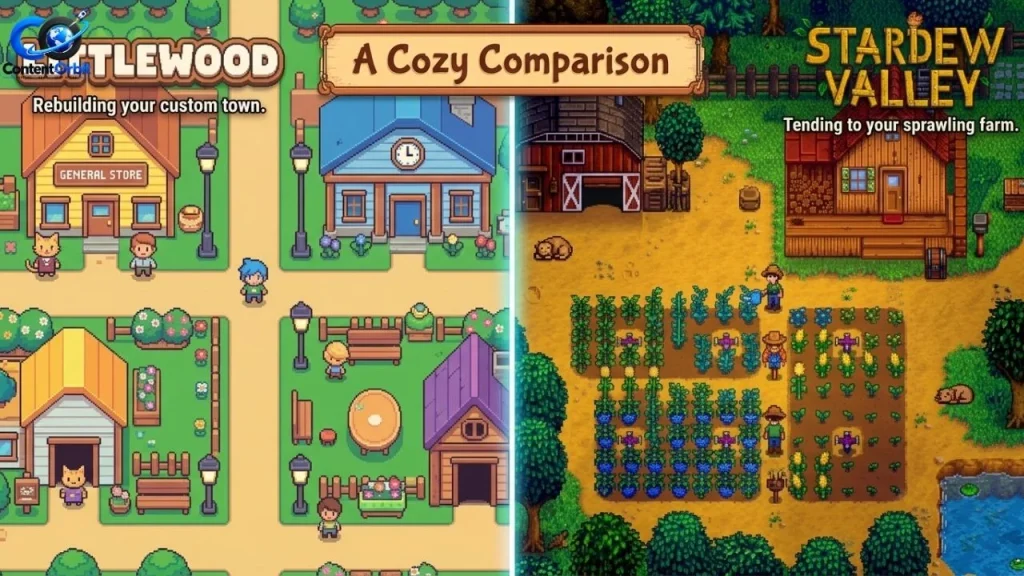
Littlewood is often compared with Stardew Valley because both games include farming, relationships, collecting, crafting, and relaxing daily activities. However, their main focus is different.
Littlewood puts much more attention on rebuilding and designing a town. Its creator has described the game as more like a 2D Animal Crossing-style experience with RPG elements, with town building, relationships, and hobbies at the center.
| Feature | Littlewood | Stardew Valley |
| Main focus | Town building | Farm and community |
| Farming | Important but not the only focus | Major gameplay system |
| Town design | Very important | More limited |
| Relationships | Yes | Yes |
| Exploration | Yes | Yes |
| Crafting | Yes | Yes |
| Combat | Limited compared with action RPGs | More developed |
| Overall style | Relaxing town-life RPG | Farming-life RPG |
Expert Tips for New Players
If you are starting for the first time, do not try to master every system immediately. Pick a few activities that you enjoy and let the others develop naturally.
A few simple habits can make the early game smoother:
- Keep useful materials instead of selling everything.
- Upgrade skills by doing activities you already enjoy.
- Talk to townsfolk regularly.
- Complete requests when you have the required items.
- Leave room for future buildings when designing your town.
- Do not worry about making the perfect town immediately.
- Experiment with different hobbies.
- Use your daily energy carefully.
- Explore new areas as they become available.
- Collect rare items instead of ignoring them.
The most important tip is to play at your own pace. Littlewood is designed to be a relaxing experience, so there is little reason to rush through it.
Conclusion
The Littlewood game offers a refreshing idea: the hero has already saved the world, so now it is time to build a peaceful life. Instead of focusing on endless battles, the game lets you rebuild a town, meet interesting characters, collect materials, improve skills, decorate homes, farm, fish, cook, craft, and explore.
Its biggest strength is the freedom it gives players. You can spend your time on the activities you enjoy and gradually turn a small settlement into a lively community. The pixel-art style and simple gameplay also make it easy to understand.
It may not be the best choice for players who want a fast, combat-heavy RPG. But if you enjoy cozy games, town builders, life simulations, collecting, and character relationships, Littlewood is an easy game to recommend. Its peaceful gameplay gives you plenty of reasons to keep coming back and make your town a little better each day.
Littlewood was developed by Sean Young and published by SmashGames. You can find the game, system requirements, features, and player reviews on Littlewood on Steam.
FAQs
1. What is the Littlewood game about?
Littlewood is a peaceful RPG about rebuilding a town after the hero defeats the Dark Wizard. Players gather resources, build structures, meet townsfolk, develop relationships, and explore the world of Solemn.
2. Is Littlewood similar to Stardew Valley?
They share some features, such as farming, relationships, crafting, collecting, and daily activities. However, Littlewood places a stronger focus on designing and rebuilding a town, while Stardew Valley centers more heavily on farming and life on a farm.
3. Can you build and customize your own town in Littlewood?
Yes. Town customization is one of the game’s main features. You can place structures, homes, furniture, decorations, and other objects to create your own town layout.
4. Is Littlewood a multiplayer game?
No. Littlewood is primarily a single-player game. Steam lists single-player support as one of its features.
5. What platforms can you play Littlewood on?
Littlewood is available on PC through Steam and on Nintendo Switch. Nintendo lists the Switch version as a single-system game and gives its release date as February 25, 2021.