
Introduction
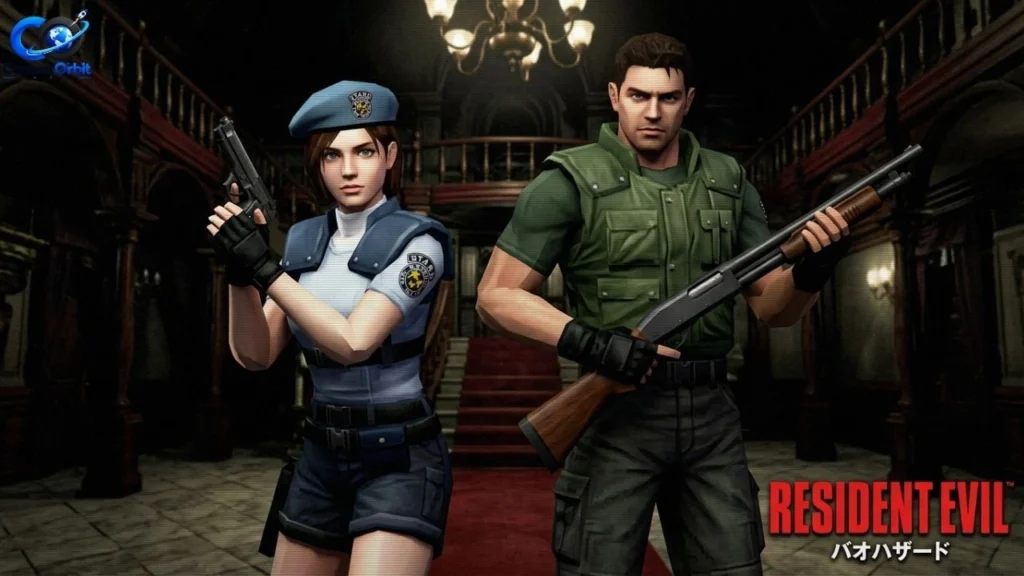
Resident Evil 1996 is the original survival horror game that helped make the genre famous. Released by Capcom for the original PlayStation in 1996, it introduced players to the terrifying Spencer Mansion, a team of S.T.A.R.S. members, dangerous zombies, strange creatures, and a mysterious biological experiment.
The game is much slower than modern action-horror titles. The game is much slower than modern action-horror titles, which makes it different from many story-driven games. Ammunition is limited, healing items are valuable, and the player must think carefully before fighting every enemy. The fixed camera angles also make exploration feel tense because you cannot always see what is waiting around the next corner.
More than just an old horror game, the original Resident Evil became the foundation for one of gaming’s most famous franchises. This guide explains its story, gameplay, characters, enemies, differences between versions, strengths, weaknesses, and why the 1996 classic still matters.
Table of Contents
- What Is Resident Evil 1996?
- Story and Setting
- Gameplay, Combat, and Exploration
- Characters, Enemies, and Versions
- Is Resident Evil 1996 Still Worth Playing?
What Is Resident Evil 1996?
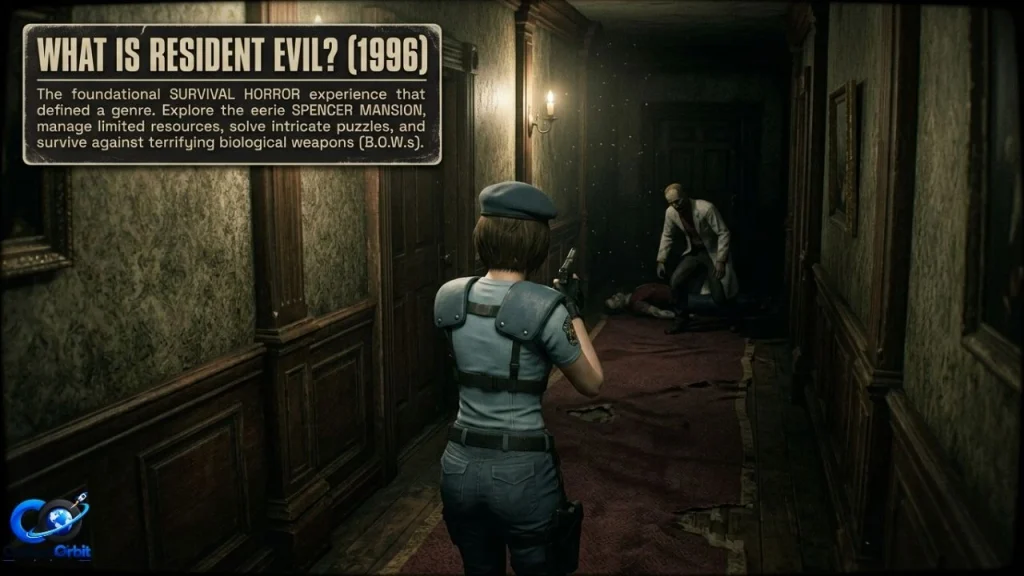
Resident Evil was developed and published by Capcom and first released for the PlayStation in March 1996 in Japan and North America, with a European release following later that year. It was directed by Shinji Mikami and became one of the most important survival horror games of its era.
The game follows members of the Special Tactics and Rescue Service, better known as S.T.A.R.S. After strange murders occur near Raccoon City, the Bravo Team disappears while investigating. The remaining members of Alpha Team are sent to search for them. Their mission quickly turns into a fight for survival when they discover an abandoned mansion filled with monsters.
Why the Original Was Important
Before Resident Evil, horror games already existed, but Capcom’s game helped establish many ideas that became closely associated with survival horror.
The player has to manage limited resources instead of simply defeating everything. The mansion is also designed like a puzzle-filled maze. Doors, keys, locked rooms, hidden items, and backtracking are all important parts of the experience.
The famous loading screens between rooms also became part of the game’s identity. On the original PlayStation, a short door-opening animation helped hide loading times. Instead of simply being a technical limitation, it became a small source of suspense because players never knew what might be waiting on the other side.
Story and Setting
The story begins when Alpha Team enters a forest area near Raccoon City after receiving information about missing team members. The situation becomes dangerous almost immediately, forcing the survivors to take shelter inside the Spencer Mansion.
The mansion looks like a normal old estate from the outside, but its rooms hide laboratories, secret passages, traps, puzzles, and evidence of illegal experiments. As the player explores deeper, the mystery surrounding the mansion and the strange creatures becomes clearer.
The Spencer Mansion
The Spencer Mansion is one of the most memorable locations in the series. Instead of being a simple level that players finish once, it acts almost like a giant puzzle.
You repeatedly return to familiar rooms, but your understanding of them changes as you find new keys and items. A locked door discovered early in the game may become important much later.
This design creates a strong feeling of exploration. You are not simply moving from one level to the next. You are learning how the mansion fits together.
The Mansion Mystery
As the story continues, the player discovers information about the experiments taking place beneath the mansion. The creatures are connected to biological research, and the mansion contains clues about what happened to the people working there.
Documents, notes, photographs, and environmental details help explain the mystery. This approach means that players who explore carefully can understand more of the story than players who simply rush toward the next objective.
The story also has different outcomes depending on the player’s actions. Saving certain characters and completing specific tasks can affect how the adventure ends.
Gameplay, Combat, and Exploration
Resident Evil 1996 uses a survival horror design that rewards careful decisions. Your inventory space is limited, so you cannot carry every weapon, key item, and healing item at the same time.
This means you often have to decide what is important before leaving a safe room. A key item may be needed later, while extra ammunition may be more useful during a difficult section. Good inventory management can make the difference between a smooth playthrough and a frustrating one.
Fixed Camera and Controls
One of the game’s most famous features is its fixed camera system. Instead of controlling the camera freely, players see each room from carefully chosen angles.
The camera can hide parts of the environment. When you walk into a new area, an enemy may suddenly appear because it was outside your previous view.
The original controls can feel unusual to modern players. The character moves relative to their direction rather than simply following the direction pressed on the controller. Many players call this “tank controls.”
It takes time to learn, but once understood, the controls become predictable. New players should practice turning and backing away from enemies before entering dangerous areas.
Combat and Resource Management
Combat is important, but fighting is not always the best option. Ammunition is limited, and some enemies can take several shots before they fall.
This creates an important question: Should you fight this enemy or avoid it?
In a narrow hallway, fighting may be necessary. In a larger room, moving around an enemy might save ammunition. This simple decision-making is a major reason the game feels different from modern action games.
The original game includes several weapons, including a handgun, shotgun, grenade launcher, magnum, and other weapons depending on the character and scenario. Each has a different purpose.
Puzzles and Exploration
Puzzles are another major part of the game. You may need to find keys, arrange objects, examine items, or discover clues to open new areas.
Some puzzles are straightforward, while others require you to remember information found earlier. Exploration is therefore closely connected to problem-solving.
A useful beginner habit is to examine important objects carefully. An item that looks ordinary may contain a clue or have another function that is not obvious at first.
Characters, Enemies, and Versions
Resident Evil 1996 features two main playable characters: Chris Redfield and Jill Valentine. Both belong to S.T.A.R.S., but their campaigns are not exactly the same.
Jill generally has a larger inventory and can use a lockpick, making some exploration easier for beginners. Chris has fewer inventory slots and cannot use the lockpick in the same way, making his scenario somewhat more demanding.
| Feature | Jill Valentine | Chris Redfield |
| Inventory | Larger | Smaller |
| Lockpick | Yes | No |
| Difficulty | Generally easier | Generally harder |
| Story differences | Yes | Yes |
| Play style | More flexible | More challenging |
| Best for beginners | Usually Jill | Better after learning the game |
Famous Enemies
The game is filled with enemies designed to make exploration dangerous.
Zombies are the most recognizable enemies. They are slow but dangerous, especially in narrow areas.
Cerberus dogs are faster and can attack suddenly. They are especially effective at creating panic when they appear unexpectedly.
Hunters are stronger creatures that become a serious threat later in the game. They are faster than zombies and can deal heavy damage.
Web Spinners are giant spiders that can poison the player and make certain areas dangerous.
The game also includes larger creatures and bosses that require different approaches. These encounters help break up normal exploration and give the player major goals.
Different Versions of Resident Evil
The original game received different releases and revisions. The Japanese, North American, and European editions are not completely identical, and later versions made various changes.
One important release is Resident Evil: Director’s Cut, which added changes to gameplay and presentation. It also offered different difficulty options and other adjustments.
Players should therefore be careful when comparing old videos, guides, and screenshots. Details can differ depending on which release is being discussed.
Is Resident Evil 1996 Still Worth Playing?
Yes, especially if you enjoy classic survival horror or want to understand how the genre developed. The game may look and feel old compared with modern Resident Evil titles, but its core ideas remain effective.
The limited resources, mansion design, puzzles, enemy placement, and atmosphere work together to create tension. The game does not need constant action to be frightening.
At the same time, new players should understand that the original has several old-fashioned features. The controls take practice, the graphics are dated, and some puzzles can feel strange by modern standards.
Benefits of the Original
The biggest strengths include:
- Strong survival horror atmosphere.
- Memorable Spencer Mansion setting.
- Interesting exploration and backtracking.
- Limited resources that create tension.
- Multiple playable characters.
- Classic enemies and boss encounters.
- Puzzles mixed with combat.
- Important historical value for horror gaming.
- Shorter and more focused than many modern open-world games.
Drawbacks for Modern Players
The same features that make Resident Evil memorable can also make it difficult for new players.
The fixed camera can sometimes make movement confusing. The old controls require practice. Some rooms and puzzles can also feel less intuitive than modern games.
The voice acting is another famous part of the original. Some lines became memorable because of their unusual delivery. While this can be funny today, it may feel strange to someone expecting serious modern dialogue.
Original Resident Evil vs. Resident Evil Remake
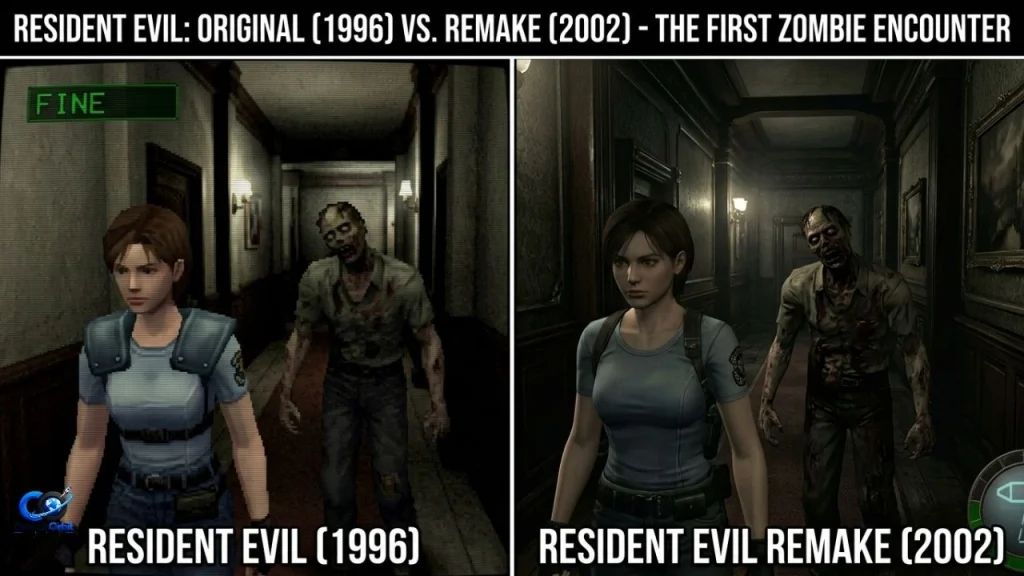
The original 1996 game and the later remake are related but should not be treated as identical experiences.
| Feature | Resident Evil 1996 | Resident Evil Remake |
| Release era | 1996 | 2002 |
| Graphics | Early 3D/polygonal style | Much more detailed |
| Setting | Spencer Mansion | Expanded Spencer Mansion |
| Gameplay | Classic survival horror | More refined survival horror |
| Story | Original version | Expanded and changed |
| Atmosphere | Classic and campy | Darker and more serious |
| Best reason to play | Historical experience | Modernized classic |
The remake keeps the basic story and setting but significantly improves visuals, atmosphere, environments, enemies, puzzles, and presentation.
However, the 1996 original has its own charm. It shows exactly what the first game was like when it helped define the series. For fans of gaming history, playing both versions can be especially interesting.
Tips for First-Time Players
If you are playing the original for the first time, these simple tips can help:
- Save regularly. Save items are limited, so use them thoughtfully.
- Do not waste ammunition. Avoid weaker enemies when it is safe.
- Use item boxes. Store objects you do not need immediately.
- Read documents. They often contain clues about the story or puzzles.
- Learn the mansion layout. Knowing where rooms connect saves time.
- Try Jill first. Her larger inventory and lockpick can make the first experience easier.
- Examine important items. Some objects reveal additional information when examined.
- Carry healing items carefully. Do not wait until your health is extremely low.
- Expect backtracking. Returning to earlier rooms is part of the design.
- Be patient. The game is built around exploration rather than speed.
Conclusion
Resident Evil 1996 remains an important part of gaming history and a classic example of survival horror. Its Spencer Mansion setting, limited resources, fixed camera angles, puzzles, memorable enemies, and tense exploration created a formula that influenced many games that followed.
The game is not as easy to jump into as a modern action title. The controls can take time to learn, and the visuals and dialogue clearly belong to the 1990s. However, these older elements do not erase the strong ideas behind the game.
Resident Evil was developed and published by Capcom and first released for the PlayStation in 1996.
If you want to experience where the Resident Evil series began, the original Resident Evil 1996 is still worth exploring. And if you enjoy it, comparing it with the 2002 remake can show just how much the series changed while keeping the same basic horror foundation.
FAQs
1. When was Resident Evil 1996 released?
The original Resident Evil was released for the PlayStation in 1996. It was developed and published by Capcom and became one of the defining survival horror games of its generation.
2. Who are the playable characters in Resident Evil 1996?
The two main playable characters are Jill Valentine and Chris Redfield. Their scenarios contain differences in inventory, abilities, story events, and difficulty.
3. Is Resident Evil 1996 the same as the remake?
No. The 2002 remake keeps the basic story and mansion setting but significantly changes the visuals, environments, puzzles, enemies, and some story details. The 1996 version is the original experience.
4. Is the original Resident Evil difficult?
It can be difficult for modern players, mainly because of limited ammunition, restricted inventory space, fixed camera angles, and older controls. Choosing Jill can make the first playthrough easier.
5. Is Resident Evil 1996 worth playing today?
Yes, particularly for fans of survival horror and gaming history. It has dated graphics and controls, but its atmosphere, exploration, resource management, and mansion design remain influential.